5 Tactics to Maximize Dine-In Revenue for Malaysian Restaurants
Feeling the pinch of fluctuating dine-in revenue amidst Malaysia's changing food scene? This article shares five practical strategies to steady and raise your restaurant's earnings, so every dish served and every table turned helps the bottom line.
 07 Jan 2026

 Eats365
Contents
- Solving the Hybrid Bottleneck: Why Manual Workflows Stall Peak Revenue
- Tactic 1. Set up channel-specific menus and pricing
- Tactic 2. Bridging the service gap through a unified tableside technology
- Tactic 3. Turning digital engagement into a clear roadmap for long-term retention
- Tactic 4. Optimization of Floor Layout and Station Logistics
- Tactic 5. Dynamic Upselling Through Automation and POS Intelligence
- Maximise Your Restaurant's Potential
- FAQ about Increasing Dine-in Restaurant Revenue
Solving the Hybrid Bottleneck: Why Manual Workflows Stall Peak Revenue
Manual workflows slow every step of the service cycle, from greeting and ordering to payment, so even a fully booked Malaysian dining room fails to reach its revenue potential. When staff queue at a single POS, handwrite orders, and process bills by hand, guests wait longer, table turns drop, and order mistakes rise—directly reducing sales and profit during the very hours that should be most profitable.
Malaysian diners now switch fluidly between dine-in and delivery, and they no longer separate 'online' from 'offline' dining in their minds. A family might order GrabFood on a weekday, visit the same brand for a weekend treat, and buy from a mall outlet at lunch. Online food delivery in Malaysia keeps growing, according to Statista, so most restaurants run a hybrid model whether they planned to or not.
When owners treat delivery platforms as a separate side business, kitchen bottlenecks, weaker dine-in service, and confusing pricing often follow—those things cut into margins. To protect service quality and grow total revenue, restaurants must treat both channels as a single, coordinated operation—with separate menus, clear capacity rules, and deliberate cross-promotion—instead of letting one channel cannibalise the other.
During peak hours in Malaysian restaurants—Friday lunch in KL, weekend dim sum, or buka puasa buffets—demand usually isn’t the issue. The issue appears in the small gaps: guests waiting for menus, servers lining up at the POS, the kitchen re-firing wrong orders, and diners waiting for the bill. Research on slow service and lost sales shows that when guests feel service drags, they cut their spend, skip add-ons like dessert, or do not return. That reduces revenue even when every table looks busy.
Much of the lost revenue comes from “dead time” in the service cycle. Each five-minute delay reduces the number of turns you can complete in a shift. Over a dinner service, losing one extra turn per table can cost a popular spot in PJ or Penang hundreds or thousands of ringgit. Manual ordering also drives costly mistakes. Operators who track voids and re-fires through POS analytics see how slow service and mistakes hurt both table turnover and margin.
5 Common manual bottlenecks that reduce table turns
-
Paper menus and manual explanations: Staff spend several minutes walking menus to each table and repeating the same dish explanations.
-
Single POS terminal: When everyone keys in orders at one POS, servers queue up, delaying tickets to the kitchen.
-
Handwritten order slips: Paper dockets get lost, smudged, or misread, increasing wrong orders and costly re-fires.
-
Manual bill preparation: Staff walk back and forth between the table and POS multiple times to process a single payment.
-
Unplanned FOH movement: Servers criss-cross the dining room for small tasks instead of batching tasks by section.
Tactic 1. Set up channel-specific menus and pricing
Start by engineering two menus for two clear use cases: table experience versus delivery durability. Dishes that impress in-house—sizzling plates, crunchy textures, fragile garnishes—often arrive disappointingly after 25 minutes in traffic. Use a simple menu-engineering grid for each channel, as shown in menu engineering basics: pick high-margin, popular items that travel well for delivery, and keep the full, experiential line-up for dine-in.
Stop delivery spikes from harming seated guests by setting clear kitchen capacity rules. Map your line: how many tickets per 15 minutes can the hot line, fry station, and beverage section handle? Many Malaysian operators set soft limits per platform (for example, capping simultaneous GrabFood and foodpanda orders during peak hours). An integrated POS like Eats365 can route orders by channel and time so the head chef sees when to pause delivery tickets.
Make every order support dine-in business. Use delivery packaging to invite app-based customers into your dining room. Simple moves work: inserts with bounce-back offers for weekday lunch, QR codes linking to a booking page, and clear promotion of dine-in-only dishes.
Tactic 2. Bridging the service gap through a unified tableside technology
Modern tableside solutions let staff handle everything at the table with handheld devices or customer-facing tools. Start with quick ordering: use BYOD or QR code systems so guests scan and pick their nasi lemak or roti canai as soon as they sit down, cutting wait times from 10 minutes to under two.
Handheld mPOS units send those orders straight to the kitchen display system (KDS), removing scribbled notes that cause wrong curries or missing teh tarik. Eats365's visual menus make upselling more natural by showing pictures of high-margin add-ons. For Malaysia’s diverse crowds, multi-language support helps everyone see the menu in Bahasa, Mandarin, or English. Tableside payment finishes the flow: tap to pay at the table and reset for the next group in seconds.
Tactic 3. Turning digital engagement into a clear roadmap for long-term retention
Malaysian restaurants turn digital engagement into long-term retention when they treat every QR order, eWallet payment, and online booking as customer data that feeds a simple, repeatable loyalty plan. By 2026, restaurants in Malaysia that treat loyalty as a data project will get ahead. Research on the future of restaurant loyalty shows a clear tilt toward personalised rewards.
A cloud POS like Eats365 helps you capture preferences and ordering history. Front-of-house staff can see guest notes and past orders before recommending dishes. Automation turns that data into repeat visits. Instead of blasting the same promo to everyone, set POS-linked campaigns: frequent diners get surprise rewards, while lapsed customers receive a gentle reminder. Trigger messages through WhatsApp or SMS based on spend, then track redemptions to fill quieter slots like rainy evenings.
Practical steps for 2026
-
Standardise guest profiles: Train staff to tag regulars and capture basic preferences (allergy, spice level) in the POS.
-
Define loyalty tiers: Use spend or visit counts to group guests into simple tiers (New, Regular, VIP).
-
Automate key campaigns: Set up welcome offers, visit-based rewards, and reactivation offers (45–60 days absence).
-
Target off-peak hours: Send time-bound rewards (e.g., "Free drink with rice bowl, 3–5pm") to active segments.
-
Review data monthly: Pull POS reports on top dishes and visit frequency to tweak menu items.
Tactic 4. Optimization of Floor Layout and Station Logistics
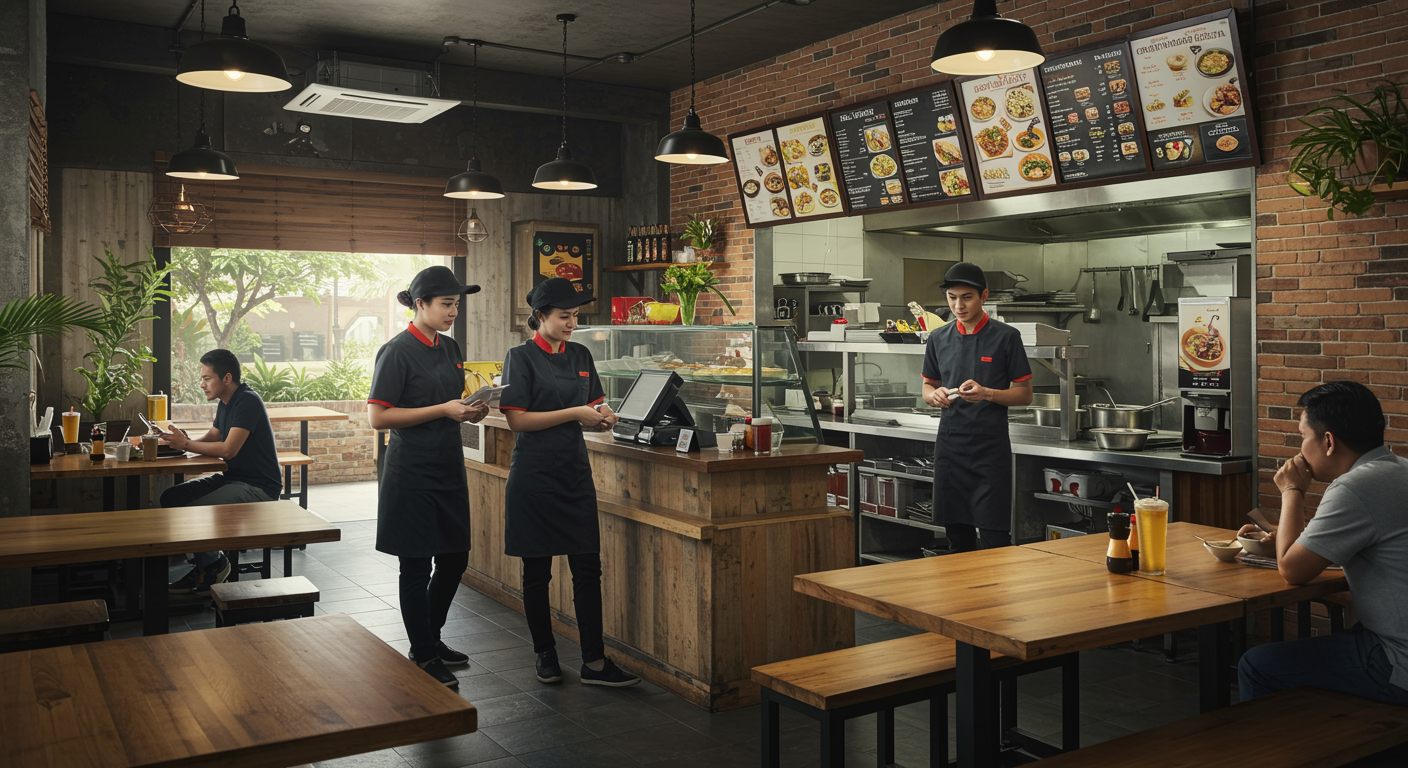
To maximize revenue, Malaysian operators must rethink the physical flow of the restaurant. High-traffic areas like the "pass" often become congested when food delivery riders and floor staff collide. By creating a dedicated pick-up zone near the entrance for riders and a separate packing station for delivery tickets, you ensure that the dine-in atmosphere remains premium and undisturbed.
Additionally, implementing "zonal service" where staff are assigned specific sections equipped with their own service stations (containing cutlery, napkins, and water) reduces unnecessary movement across the floor. Faster table clearing—supported by a dedicated busing workflow—can increase table turns by 10-15% during busy Sunday brunch shifts in urban centers like KL.
Tactic 5. Dynamic Upselling Through Automation and POS Intelligence
Maximize the value of every seated guest by leveraging intelligent POS features that do the heavy lifting for your team. Modern systems like Eats365 allow Malaysian restaurateurs to move beyond manual upselling by using automated menu switching and smart prompts.
By setting your POS to automatically switch menus based on pre-set times—such as transitioning from a lunch set to a high-margin tea-time or happy hour menu—you ensure guests are always seeing the most profitable and relevant offerings without staff needing to intervene. Furthermore, the POS can be configured to display "Frequent Pairings" or high-margin add-ons like premium desserts and beverages.
When these suggestions are built directly into the digital ordering system, the upselling feels like a seamless part of the guest experience. By identifying which pairings are most successful through real-time data, you can refine your offerings to consistently boost the bottom line per cover through genuine, data-driven hospitality.
Maximise Your Restaurant's Potential
For Malaysian F&B entrepreneurs aiming to grow in a changing market, optimising both dine-in efficiency and hybrid operations matters. Eats365's integrated restaurant POS solutions help you streamline workflows, cut errors, and build lasting customer loyalty. Discover how our technology can change your business—send an inquiry to Eats365 today to learn more!
FAQ about Increasing Dine-in Restaurant Revenue
Q: What are the most effective strategies to boost dine-in restaurant sales in Malaysia for 2026?
-
Optimize your menu for both channels: keep high-margin, fragile items exclusive to dine-in while offering durable, high-profit dishes for delivery.
-
Use delivery orders as a marketing tool: include QR codes or bounce-back inserts to drive digital customers to your physical location.
-
Implement a data-driven loyalty program: use POS insights to create automated, personalized rewards that encourage repeat visits during quiet hours.
-
Adopt tableside technology: use BYOD or mPOS units to speed up the ordering and payment process, increasing the average spend per table.
Q: How can Malaysian restaurants increase table turnover and maximize revenue during peak hours?
-
Eliminate manual bottlenecks like paper menus and single-point POS queues by switching to QR-based ordering and handheld service devices.
-
Use a Kitchen Display System (KDS) to stop information loss from handwritten notes, speeding up prep times and reducing re-fires.
-
Introduce tableside payments to shave minutes off the checkout process, allowing you to reset tables immediately.
-
Manage hybrid demand by setting POS capacity limits, ensuring delivery spikes don't compromise service for seated diners.
Q: How do successful Malaysian restaurants balance dine-in and delivery sales effectively?
-
Treat delivery and dine-in as a single unified operation backed by integrated POS data rather than two separate businesses.
-
Redesign floor layouts to include dedicated rider pick-up zones and packing stations, preventing congestion in the dining area.
-
Use real-time POS analytics to monitor kitchen load and temporarily pause delivery orders when the dine-in room is at full capacity.
-
Maintain brand consistency across all channels while using specific promotions to funnel delivery users into the dine-in experience.
Q: How to reduce order errors and improve customer satisfaction in Malaysian restaurants?
-
Replace manual ticket writing with digital ordering (QR/mPOS) to ensure instructions are sent accurately and clearly to the kitchen.
-
Use multi-language visual menus to help staff and guests navigate diverse language preferences without confusion.
-
Store guest profiles and allergy notes in your POS so front-of-house staff can provide personalized, error-free recommendations.
-
Streamline FOH logistics with station-based workflows to ensure diners are attended to promptly without staff criss-crossing the floor.
Q: How can Eats365's tableside technology improve dining experience and sales for Malaysian restaurants?
-
It accelerates the entire service cycle—from scan-to-order through to skip-the-counter payments—drastically increasing table turns.
-
It boosts transaction value through automated prompts for frequent pairings and visual upsells built into the digital menu interface.
-
It bridges the service gap by allowing staff to focus on hospitality while the technology handles the administrative tasks like ticket routing.
-
It scales with your growth, providing the data needed to refine your menu and loyalty strategies based on actual Malaysian consumer behavior.