Food Delivery Platforms in Malaysia 2026 | Commission Fees & Profitability Compared
Are GrabFood, foodpanda, or ShopeeFood really the most profitable choice for your outlet? Compare commissions, reach, halal visibility, and workflow costs—and discover how to measure true profitability—before you sign.
 15 Jun 2026

 Eats365
Contents
- Malaysia's Best Food Delivery Platform for Restaurant Profitability
- How Much Do Restaurants Actually Keep After Delivery Platform Fees
- How Does Halal Status Affect Your Delivery Platform Choice
- Should You Launch on GrabFood, foodpanda, and ShopeeFood at Once
- How Does POS Integration Reduce Delivery Errors and Refunds
- Evaluate Profitability Before Expanding Channels
- Food delivery platform Malaysia FAQs
Malaysia's Best Food Delivery Platform for Restaurant Profitability
| Dimensions | GrabFood | foodpanda | ShopeeFood |
|---|---|---|---|
| Commission & fees |
|
|
|
| Reach & discoverability |
|
|
|
| Halal listing & verification |
|
|
|
| Promotions & marketing costs |
|
|
|
While ShopeeFood publicly cites a 30% standard rate and competitors like GrabFood and foodpanda often range between 20% and 30%, these figures are directional.
A platform with a 5% lower commission could still result in lower net profit if it lacks the order volume or regional reach to keep your kitchen busy.
Best Fit at a Glance
-
GrabFood: Best for high-volume urban outlets, halal-certified businesses seeking maximum visibility, and restaurants in East Malaysia (Sabah/Sarawak).
-
foodpanda: Best for wide national reach and businesses looking for an established alternative to Grab with flexible geo-based discovery.
-
ShopeeFood: Best for cost-conscious operators in major cities who want to leverage the massive existing Shopee user base and daily settlement cycles.
Platform Recommendation by Business Type
-
New Hawker or Mamak: ShopeeFood is often a strong entry point due to its integrated user base, though GrabFood is essential for capturing the highest possible local volume.
-
Café: focus on GrabFood for its "Dine Out" and discovery ecosystem, which helps transition delivery customers into foot traffic.
-
Halal Full-Service Restaurant (FSR): GrabFood is the preferred choice here. Its mature JAKIM-verified halal badge and dedicated search filters ensure your certification actually drives sales.
-
Cloud Kitchen / QSR Chain: A multi-platform approach is standard, but Cloud Kitchen foodpanda's wide national coverage is vital for chains expanding outside the Klang Valley.
-
Sabah or Sarawak Outlet: GrabFood remains the dominant force in East Malaysia, offering the most reliable logistics and discoverability in these regions.
It is critical to remember that profitability is influenced by more than just fees. High discounting, frequent refunds, or operational errors can erode margins faster than commission rates. Operators should always request a written, outlet-specific proposal to confirm hidden costs like marketing splits and onboarding fees before committing.
How Much Do Restaurants Actually Keep After Delivery Platform Fees?
Profitability is driven by net sales after all deductions, not just the base fee. When comparing platforms, consider these hidden drivers:
-
Voucher Funding: Determine if discounts are platform-funded or merchant-funded. If you fund a 15% discount on top of a 30% commission, your effective platform take-home pay drops significantly. For example, a menu item priced at RM 30 with a 30% GrabFood commission leaves you with RM 21 gross. Add a 15% merchant-funded discount (RM 4.50), and your net receipt falls to RM 16.50—a 45% total deduction before food, packaging, or labor costs.
-
Ad Spend: Discoverability on platforms like GrabFood and foodpanda often requires paid placements or "sponsored" visibility to maintain order volume during peak hours. These costs further reduce contribution margin and should be tracked separately.
-
Operating Costs: Remember that packaging, food costs, and delivery-specific labor remain your responsibility and are rarely itemized in platform statements. A single refund due to late delivery or incorrect order can erase the margin on multiple successful orders.
To ensure a menu item is actually making money, use this Contribution Margin Formula:
Delivery Selling Price – (Food Cost + Packaging + Commission + Merchant-Funded Discounts + Delivery-Specific Labor + SST) = Net Profit.
How to include SST in your delivery margin calculation
Malaysia's Service and Sales Tax (SST) applies at 6% for food and beverage delivery services. Whether SST is collected by the platform on your behalf or deducted from your settlement depends on your contract and whether you are registered for SST. For restaurants operating below the RM1.5 million annual taxable revenue threshold, SST registration is optional; those above the threshold are required to register and remit SST.
The key distinction: delivery orders (takeaway) are generally zero-rated for SST in Malaysia if the customer receives the order without on-premise table service. However, some platforms handle SST collection independently, while others leave SST responsibility with the merchant. Confirm your platform's SST policy in your merchant contract—it is critical to know whether the 30% commission is before or after SST, and whether you or the platform is remitting it.
If you are an SST-registered restaurant, the formula becomes:
Delivery Selling Price – (Food Cost + Packaging + Commission + Merchant-Funded Discounts + Delivery-Specific Labor + [SST on Selling Price ÷ 1.06]) = Net Profit.
Here is a practical example using a RM 30 menu item:
| Line Item | Amount |
|---|---|
| Delivery Selling Price (customer pays) | RM 30.00 |
| Less: 30% GrabFood Commission | (RM 9.00) |
| Subtotal before food & SST | RM 21.00 |
| Less: Food Cost (assume 30% of selling price) | (RM 9.00) |
| Less: Packaging | (RM 1.50) |
| Less: Delivery-Specific Labor | (RM 2.00) |
| Subtotal before SST | RM 8.50 |
| Less: SST 6% (if you are registered and liable) | (RM 1.70) |
| Net Profit per Order | RM 6.80 |
| Profit Margin | 22.7% |
Now add a 15% merchant-funded voucher discount on the same item (customer pays RM 25.50 instead of RM 30):
| Line Item | Amount |
|---|---|
| Delivery Selling Price (after 15% discount) | RM 25.50 |
| Less: 30% Commission (on RM 25.50) | (RM 7.65) |
| Subtotal before food & SST | RM 17.85 |
| Less: Food Cost (30% of RM 30 selling price, not discounted) | (RM 9.00) |
| Less: Packaging | (RM 1.50) |
| Less: Delivery-Specific Labor | (RM 2.00) |
| Subtotal before SST | RM 5.35 |
| Less: SST 6% (on RM 25.50) | (RM 1.53) |
| Net Profit per Order | RM 3.82 |
| Profit Margin | 15.0% |
The takeaway: A 15% merchant-funded voucher drops net profit from RM 6.80 to RM 3.82 per order—a 44% cut. That's why platform profitability depends on tracking contribution margin per order, not total sales.
Which Platform Fits Your Strategy?
-
GrabFood: Ideal for outlets prioritizing broad reach. Its super-app integration provides access to a massive user base, making it a strong choice for high-volume urban locations.
-
foodpanda: Well-suited for repeat-order strategies. Its ecosystem relies heavily on active participation in promotions, which can drive consistent volume if you manage your discount margins carefully.
-
ShopeeFood: A viable option for margin-sensitive testing. Because it leverages Shopee's existing e-commerce users and offers wide geographic coverage, it is useful for testing demand in specific suburban areas where local demand is already proven.
How Does Halal Status Affect Your Delivery Platform Choice?
Halal status and rider reliability can change which food delivery platform in Malaysia actually suits your outlet. Treat JAKIM-certified, Muslim-friendly but uncertified, and non-halal operations as distinct categories—and in Sabah and Sarawak, test real coverage before committing spend.
| Decision area | What to check before launch | Why it affects profitability |
|---|---|---|
| Halal status | Current certificate, permitted logo use, and platform documentation requirements | Incorrect halal claims risk customer trust and listing problems. |
| App listing | Halal label, category placement, search filters, and required supporting documents | A certificate does not automatically guarantee visibility in every app's halal search results. |
| Sabah and Sarawak coverage | Exact delivery zones, rider supply, pickup time, and dinner-peak reliability | Weak coverage can raise cancellations, cold-food complaints, and refunds. |
| Claim wording | JAKIM-certified states certified status only where docs are accepted; Muslim-friendly (uncertified) must not claim JAKIM; non-halal avoids halal labels entirely | Precise wording prevents listing rejections and trust damage. |
| Trial measurement | Weekly cancellations, prep time, ratings, demand, and contribution margin by platform; expand only channels that pass | Order count alone does not show whether a channel earns profit. |
JAKIM halal certification covers food premises—restaurants, food courts, cafeterias, bakeries, fast-food outlets, kiosks, catering, and hotels. Confirm your certificate is still current before making any halal claim in a delivery-app profile.
Should You Launch on GrabFood, foodpanda, and ShopeeFood at Once?
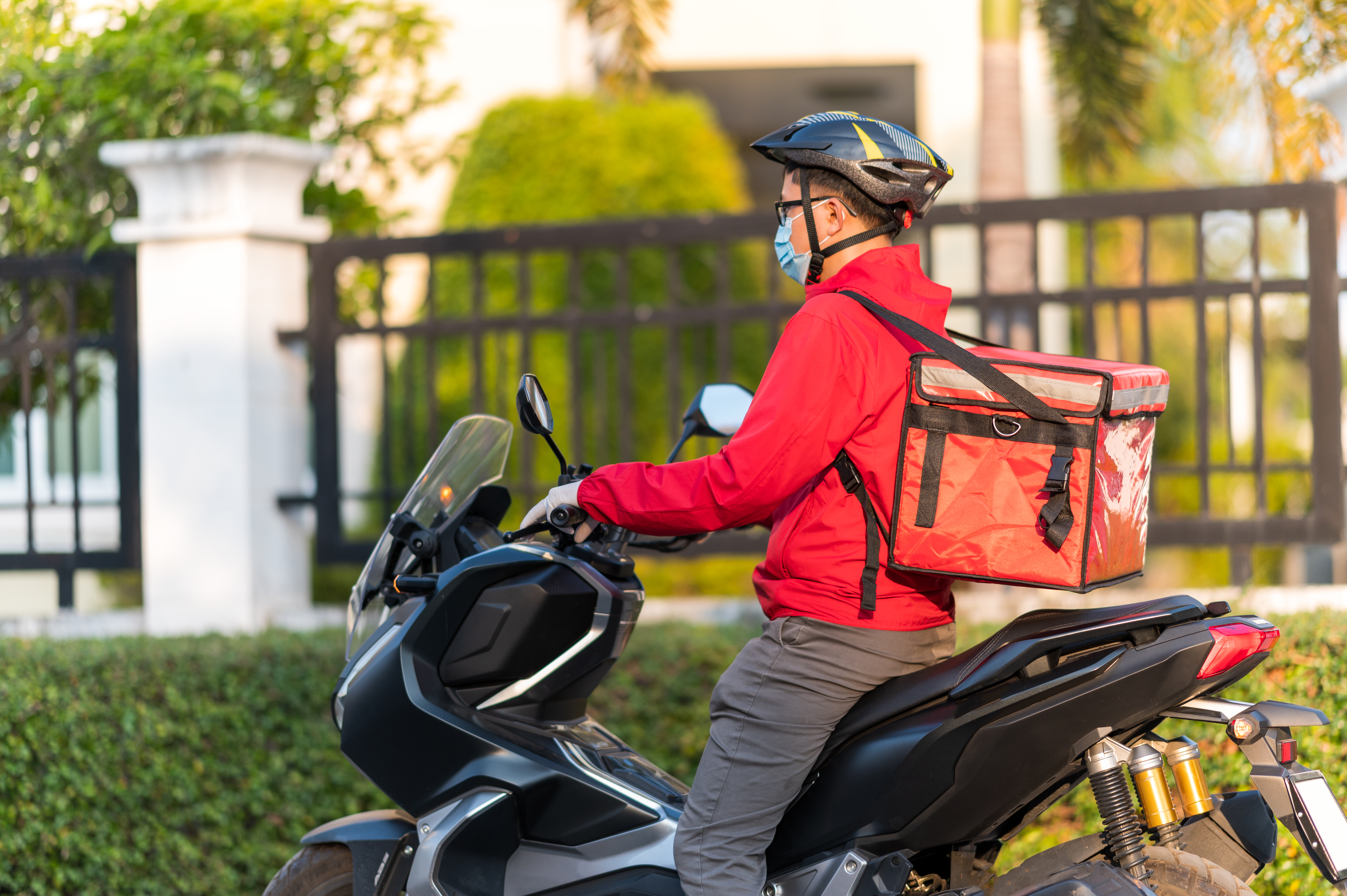
No, run a 30-day trial on one platform before adding another. Launching all three at once splits staff attention and hides the channel that actually earns profit. A single-channel trial makes commission, discount costs, kitchen performance, and delivery profitability visible per platform.
-
Choose one starting channel. Begin with the platform that fits your location, margin, and customer; treat each merchant's terms as outlet-specific and get commission and promotion commitments in writing.
-
Set a delivery-ready menu. Start with items that travel well and have clear modifiers; pause anything the kitchen can't fulfil reliably.
-
Record the same measures daily. Orders, gross/net sales, AOV, discounts, commission, refunds, prep time, cancellations, ratings, and repeat orders.
-
Review weekly. Calculate contribution per order after food, packaging, discounts, commission, and delivery labour—compare lunch, dinner, and weekend, not just total sales.
-
Add a second platform only when ready. Confirm menu accuracy, packaging, prep time, and stock controls first, then repeat the same measurement.
A platform with more orders can still be less profitable if restaurant-funded vouchers, refunds, or rush-hour mistakes rise. Merchant terms and commission vary by contract, volume, and campaign, so trust your own 30-day results before expanding. If you test delivery-only bundles or app-specific prices, state the value clearly and keep dine-in customers informed—unexplained price gaps invite complaints.
How Does POS Integration Reduce Delivery Errors and Refunds?
| Workflow area | Disconnected marketplace tablets | Connected Eats365 workflow |
|---|---|---|
| Order intake | Staff monitor and accept orders on separate devices | Supported online orders can route into Eats365 POS and kitchen workflows without manual re-entry |
| Menu updates | Teams update prices, modifiers, and sold-out items channel by channel | Central controls can help teams manage online ordering menus and pricing across outlets |
| Kitchen production | Cooks sort dine-in, pickup, and delivery tickets manually | Eats365 Kitchen Display System presents digital tickets for kitchen routing and prioritisation |
| Reporting | Managers combine platform and POS figures manually | Eats365 reporting can review sales and order activity in one restaurant system |
At a lunch rush, counter, QR, pickup, and delivery orders all hit the same pass. Re-keying marketplace orders or missing a tablet alert leads to late rider pickups, wrong items, or refunds that erase the delivery margin.
Platform integration in Malaysia
| Platform | Integration with Eats365 | What operators should do |
|---|---|---|
| GrabFood | Native integration: direct menu sync and order routing into POS, KDS, and reporting | Activate native integration—no manual tablet re-entry needed |
| foodpanda & ShopeeFood | No native direct menu sync currently | Use manual menu management or middleware (e.g., Deliverect); confirm scope with your Eats365 account manager |
| Manual fallback (all platforms) | Manage each menu via its merchant portal | Pause delivery orders by type during peak to prevent kitchen overload |
The Best Online Ordering System for Restaurants in Malaysia notes that Eats365 connects online orders with POS and kitchen workflows. Confirm your exact integration scope for each platform before committing, then review your tablet count, menu-update process, and channel-level reporting to see whether you're ready to scale—or need to fix the workflow first.
Read more: Eats365 Online Ordering Guide
Evaluate Profitability Before Expanding Channels
For Malaysian restaurants, delivery-platform choice depends on more than commission alone. Reach, halal visibility, promotions, settlement timing, and operational fit can all affect net profit. Comparing written merchant terms and testing contribution margin by outlet can help operators choose the platform mix that suits their scale. If you are reviewing delivery workflows, solutions like Eats365 are one useful reference point to explore alongside other restaurant tech options.
Food delivery platform Malaysia FAQs
Q: Why do GrabFood and foodpanda commissions vary so much between restaurants in Malaysia?
GrabFood and foodpanda do not publish fixed Malaysia commission tables; rates are negotiated by outlet. Your exact commission depends on contract terms, subscription tier, location, volume, and campaign participation. Always request a written, outlet-specific proposal before signing to confirm hidden costs like marketing splits and onboarding fees.
Q: Does a 5% lower commission rate automatically mean higher profitability for my restaurant?
No. A platform with lower commission but fewer orders or higher merchant-funded voucher requirements may yield weaker net profit. Profitability depends on order volume, your food costs, packaging, discounts you fund, delivery-specific labour, and refunds. Track contribution margin—not total sales—to compare platforms accurately.
Q: Can I manually re-key marketplace orders into my POS during lunch rush, or do I need integration?
Manual re-entry risks missed tickets, incorrect items, and delayed preparation during peak hours. A connected POS delivery integration routes orders directly from platforms into your system and kitchen display, eliminating duplicate entry and reducing errors that erode delivery margins.
Q: What should I measure during a 30-day food delivery trial in Malaysia?
Track orders, gross sales, net sales (after commission and vouchers), average order value, refunds, prep time, cancellations, ratings, and repeat customers. Calculate contribution per order after food, packaging, discounts, and commission. Compare weekday lunch, dinner, and weekend results to find which platform actually earns profit.
Q: How do I know if my delivery menu is priced correctly for profitability?
Use the contribution margin formula: Delivery Price minus (Food Cost + Packaging + Commission + Merchant-Funded Discounts + Delivery-Specific Labour + SST) equals Net Profit. Test menu items in small batches, track results by platform, and pause items that fall below your target margin or have high refund rates.
Q: Why should I avoid launching GrabFood, foodpanda, and ShopeeFood simultaneously?
Launching multiple platforms at once splits staff attention and masks which channel actually earns profit. Measure one platform's contribution margin over 30 days—including orders, refunds, prep times, and cancellations—before adding a second. This reveals operational readiness and true profitability by channel.