Why 28.5% of MY Restaurant Sales Are Digital (And How to Get More)
Did you know that 28.5% of restaurant sales are digital, and this number is only set to grow? With Malaysian diners increasingly expecting smooth digital interactions, many restaurants struggle with high browser drop-off rates due to disjointed systems. Discover how integrated POS features and practical omnichannel strategies can help you convert more digital browsers into loyal customers.
 22 Jan 2026

 Eats365
Contents
Turning Malaysia’s Omnichannel Traffic into Real Revenue
Malaysia’s push under the MyDIGITAL blueprint and MDEC’s ecommerce targets means more diners now start their meal on a screen before they walk into your outlet. With smartphone and internet penetration reaching roughly 89% of the population, Malaysia’s online food delivery market has surged into the billions of ringgit as consumer habits shift toward digital-first convenience. For many urban restaurants, 25–30% of sales now flow through GrabFood, Foodpanda, ShopeeFood, QR ordering, or first-party websites. When that much revenue depends on digital, menu structure, loyalty rules, and targeted marketing matter as much as food cost.
Optimized menu engineering on digital channels starts with visibility, not recipes. Your POS or ordering platform should flag high-margin dishes and place them in the first few tiles of each category, with clear photos and short, benefit-focused names (for example, “Crispy Ayam Set – Drink Included” instead of just “Chicken Set”). Implementing online ordering can increase average ticket sizes by 15-20% because digital platforms allow for consistent, automated upselling that doesn't rely on staff memory. Systems that use AI-driven recommendations to suggest logical add-ons—such as an extra egg for nasi lemak or premium boba toppings—can effectively lift basket sizes by nearly 20% by analyzing guest behavior in real-time. A POS such as Eats365 lets you push the same engineered menu and modifier logic across kiosks, QR, and delivery channels, so staff only maintain one source of truth instead of three or four.
To keep digital customers coming back, integrate loyalty with your POS rather than running separate stamp cards on each app. Integrated loyalty programs can drive a 17% increase in spending from repeat members compared to non-members, as seamless point tracking encourages higher frequency. In practice, this means every online or in-store bill ties to a customer profile (phone, QR, or e-wallet ID), points or stamps accrue automatically, and rewards trigger without extra forms for the guest or cashier. In Malaysia, where e-wallets such as GrabPay, Touch 'n Go eWallet, and Boost are common, linking loyalty IDs to payment methods reduces friction and makes rewards feel automatic, which supports the omnichannel direction highlighted by MDEC and regional retail technology trends that emphasize a unified customer experience. When your POS, online ordering, and loyalty live in one stack, you can see whether a GrabFood customer later dines in, and you can reward that cross-channel behaviour directly.
Once your systems capture clean order and customer data, you can run hyper-local marketing that fits Malaysian neighbourhoods instead of broad, generic discounts. Hyperlocal strategies focus on tight catchment areas—often just a few streets or a single mall—using location and behaviour data to trigger offers hyperlocal marketing. For example, you might push a lunch-set promo to office workers near KL Sentral on weekdays, a family bundle campaign to residential postcodes in Subang Jaya for weekends, or Malay-language WhatsApp blasts during Ramadan for sahur and berbuka sets. Data shows that personalized email campaigns can generate six times higher transaction rates than generic blasts, consistently ranking as a top-performing tactic in global marketing benchmarks. With POS and ordering data feeding into your CRM, you can target customers who usually order spicy dishes, those who only buy during promotions, or lapsed regulars who have not ordered for 30 days, and speak to each group differently.
To push your digital share beyond 28.5%, treat your tech stack like part of the menu, not just back-office plumbing. Start with three quick actions: (1) mark and re-position your top-margin dishes on every digital menu, (2) switch on POS-integrated loyalty so every ticket earns and burns rewards across dine-in, pickup, and delivery, and (3) set up at least one hyper-local campaign around your main trade area using the customer data you already have. Once those pieces run smoothly, you can refine AI-driven add-on logic, experiment with time-based offers, and use your POS reports to see exactly which digital tactics move revenue, not just traffic.
3 Reasons Siloed Operations Fail Modern Malaysian Diners
Malaysian diners already live in a digital-first food world. Online meal delivery penetration in Malaysia is projected to grow steadily through 2030, as digital platforms become the primary gateway for hungry consumers. At the same time, Southeast Asia’s internet economy continues to expand, with food delivery remaining a cornerstone of high-frequency digital spending. When a restaurant still runs digital and in-store operations as separate worlds, it draws plenty of clicks but loses many of those hungry shoppers before they ever become paying guests.
High Abandonment Rates: Why Browsers Do Not Become Buyers
Digital cart abandonment rates typically range between 60% and 80% across industries, a trend that directly mirrors the friction Malaysian diners feel when navigating poorly optimized restaurant ordering flows. Every extra step gives them another reason to back out and open a food delivery app instead.
Common friction points show up quickly in day-to-day operations. A customer taps a QR code in a Kuala Lumpur cafe but hits a wall when the page insists on a full app download before ordering. A family in Penang wants to place a quick pickup order from mobile web, only to see a long registration form, compulsory account creation, and no guest checkout. Others land on a menu that loads slowly, hides final prices until checkout, or offers only card payments instead of popular e wallets and DuitNow QR. These small irritations compound and send would-be guests back to Grab, Foodpanda, or a nearby competitor with a faster flow.
Managers notice this without needing complex UX theory: campaigns drive high traffic to ordering system pages, yet order counts remain low. If your POS, website, QR table ordering, and delivery marketplace orders live in separate systems, you often cannot track where diners drop off or test a simpler path. A POS that supports integrated web, QR and platform orders, such as Eats365, lets you shorten the route from menu to payment and reduce abandonment without asking guests to jump between apps.
Hidden Costs of Staying Manual
On paper, sticking to phone orders, WhatsApp messages, and handwritten dockets looks cheaper than investing in digital ordering. In practice, the labour and error costs stack up fast. During a busy Friday dinner, staff juggle phone calls, messages, walk-in guests, and delivery riders. They hear orders once from the customer, repeat them to confirm, then key them into the POS or scribble on chits for the kitchen. Every re-entry takes time and invites mistakes.
Inaccurate manual procurement and inventory tracking can cost restaurants up to 10% of their total food spend, highlighting the severe financial drain caused by non-automated back-of-house processes. While that study looks at procurement, the same pattern applies to front of house: wrong items keyed in, missed modifiers, or tickets sent to the wrong station. Research into F&B automation shows that digital ordering systems significantly reduce human error and reclaim valuable staff time compared to traditional pen-and-paper methods.
In Malaysia, QR-based ordering gives a clear example. QR ordering allows guests to place orders independently, which minimizes the traditional back-and-forth and enables staff to provide better hospitality rather than acting as simple data-entry clerks. When you route online, QR, and marketplace orders into the same POS and kitchen printers, you reduce ticket confusion during peak hours and need fewer front-of-house staff to manage the same volume. The status quo of siloed systems quietly absorbs those extra salaries, rework time, and food wastage every month.
2026 Consumer Expectations: What Malaysian Diners Will Look For
By 2026, Malaysian diners will expect restaurant ordering to match the convenience of their favourite e-commerce and super apps. Rising demand for personalization and cross-platform convenience across Southeast Asia means consumers will soon view semi-digital experiences as outdated. That translates into clear, practical demands at the restaurant level.
Diners will look for smart menus that remember past orders, highlight relevant add-ons, and adjust suggestions based on time of day or location. They will expect instant order confirmation, accurate preparation time estimates, and simple re-ordering of favourites. Many will assume they can earn and redeem loyalty rewards whether they order in store, via your website, or through delivery partners.
Payment expectations are shifting just as quickly. DuitNow QR has seen explosive growth in Malaysia, and official financial statistics confirm a sharp multi-year rise in transaction volumes as cashless adoption becomes the national standard. By 2026, most guests will treat instant e-wallet and DuitNow QR payments as default options, not nice-to-have features. They will expect fast, secure settlement online and at the table, without touching cash or waiting at a counter.
Restaurants that still rely on separate payment terminals, non-integrated online menus, and manual voucher tracking will struggle to meet those expectations. To close the gap, operators can start with three concrete steps: remove mandatory app downloads and allow guest checkout on all digital channels; connect online, QR, and marketplace orders into a single POS and kitchen workflow; and switch on convenient local payment options, including major e-wallets and DuitNow QR. Those changes cut friction for diners and reduce staff workload, which makes every ringgit spent on digital traffic work harder.
How Integrated POS Technology Improves Order Conversion
Malaysian restaurants lose sales when customers browse online menus but abandon carts due to stock issues or slow checkouts. Integrated POS systems fix this by pulling together dine-in, takeaway, and delivery orders into one dashboard. An integrated POS acts as a central hub that unifies multiple sales channels, allowing a busy nasi lemak spot in KL to switch seamlessly between walk-ins and GrabFood requests without double-entry errors.
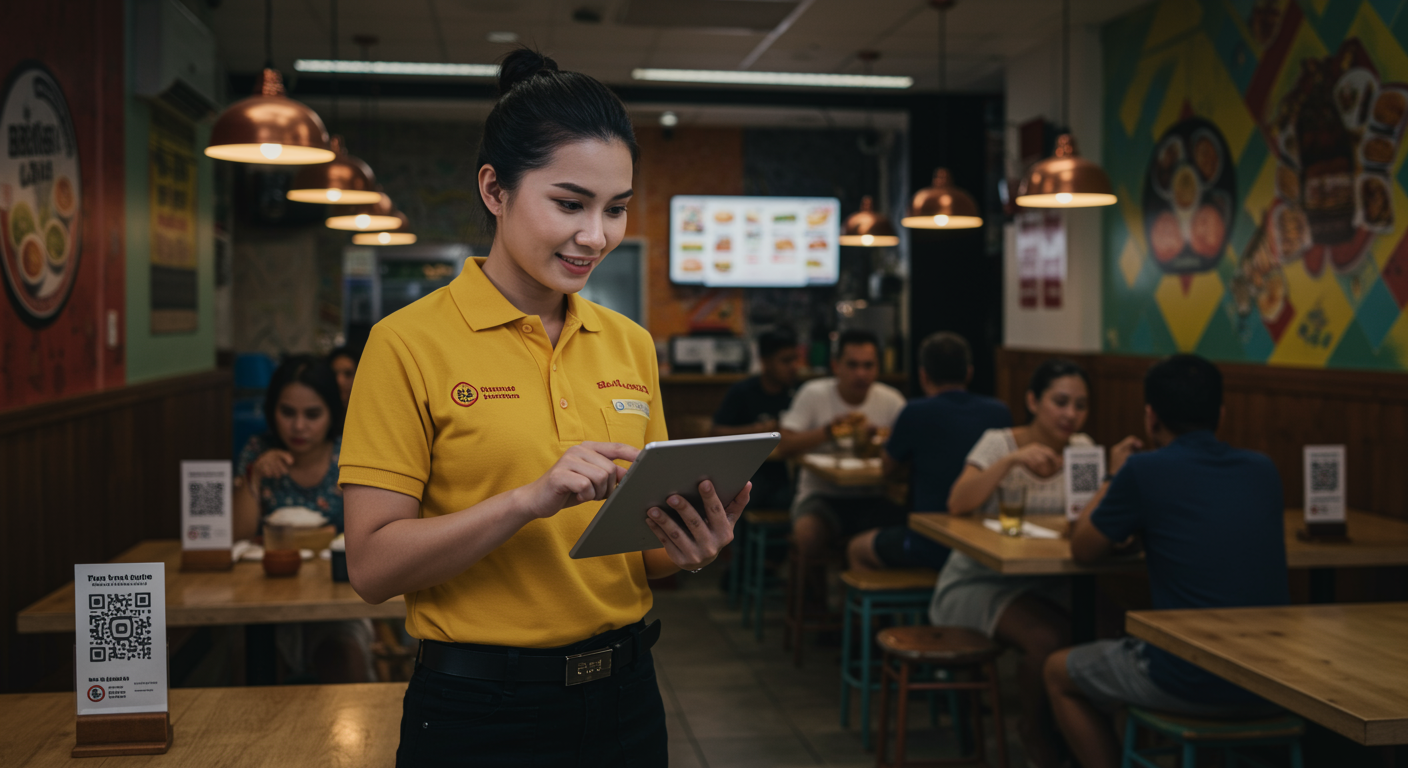
Features like QR code ordering speed things up. Diners scan a table code, pick items, and the order hits the kitchen display system (KDS) right away. This cuts wait times—crucial during peak hours when lines form—and checks inventory on the spot, so no one orders roti canai that's already sold out.
Real-time syncing across channels keeps menus accurate everywhere. Pricing and availability update instantly from the POS to apps and websites, preventing stock discrepancies that frustrate customers and drive them toward competitors.
Malaysian diners now expect smooth digital experiences, with 2026 projections pointing to a big jump in mobile ordering. Disjointed setups cause most drop-offs, but unified POS merges online and offline data to turn browsers into buyers automatically. Omnichannel setups like this cut manual work, letting small mamak stalls reduce hidden costs and lift revenue.
Elevate Your Restaurant’s Digital Strategy with Eats365
In short, a unified restaurant POS system like Eats365 matters for Malaysian F&B entrepreneurs who want to grow in a digital-first market. By bringing online ordering and customer loyalty into the same platform, Eats365 helps you reduce abandonment rates, cut hidden operational costs, and meet modern diner expectations. Send an inquiry to Eats365 today to see how our solutions can increase your restaurant's digital sales and simplify operations.
General FAQs
Q: What are the most effective strategies to increase restaurant sales through digital channels in Malaysia?
Focus on optimized menu engineering (feature high-margin items with clear photos and benefit-focused names), enable AI-driven on-screen upsells and cross-sells, unify your menus and modifier logic across kiosks/QR/website/delivery via an integrated POS, switch on POS-linked loyalty so rewards earn and burn across channels, and run hyper-local, data-driven campaigns using POS/CRM customer data. Start with: reposition top-margin dishes, enable integrated loyalty, and run one hyper-local campaign.
Q: What technologies can help Malaysian restaurants boost online ordering and increase revenue?
Cloud-based integrated POS (e.g., Eats365), AI recommendation engines for upsells, QR code ordering and KDS, CRM for hyper-local marketing, real-time inventory sync, and support for local payments like GrabPay, Boost, DuitNow QR and e-wallets.
Q: Why are Malaysian restaurants struggling to convert digital browsers into actual food buyers?
Because siloed, clunky digital experiences create friction: mandatory app downloads, long registration forms, no guest checkout, slow-loading menus, hidden final prices, limited local payment options, stock discrepancies and slow checkout flows. These pain points raise cart abandonment and—when systems are separate—restaurants can’t trace drop-off points or quickly fix the UX that loses orders.
Q: What integrated POS features can automatically convert more online orders to sales?
Key features include:
-
Real-time menu and inventory sync across web, QR and marketplace channels to avoid out-of-stock orders
-
AI-driven upsell/cross-sell prompts and engineered menu placement for top-margin items
-
QR ordering that sends orders directly to the KDS with instant confirmation and prep-time estimates
-
POS-integrated loyalty tied to customer profiles and payment methods
-
Single-dashboard order handling to remove double entry and speed checkout
Q: What are the hidden costs of not implementing digital ordering for Malaysian restaurants?
Higher labour and rework time, ordering and inventory mistakes (which can eat into around 10% of costs), extra staffing needs during peaks, food wastage, lost upsell opportunities, and ongoing lost revenue from high online abandonment and inability to run targeted marketing.
Q: What specific digital ordering features do Malaysian diners expect in 2026?
Smart menus that remember past orders and suggest relevant add-ons, instant order confirmations and accurate prep-time estimates, fast re-ordering of favourites, unified loyalty that earns/redeems across dine-in, web and delivery, seamless guest checkout without mandatory app downloads, and default support for instant e-wallets and DuitNow QR payments.