O2O Marketing vs Traditional Advertising: Restaurant Owner's Guide
The digital revolution has arrived: With 46% of consumers seeking flexible dining options, restaurants must seamlessly integrate online and offline interactions to stay competitive, creating dynamic, data-driven customer journeys that drive engagement and sales.
 18 Sep 2025

 Eats365
Contents
What is O2O Marketing?
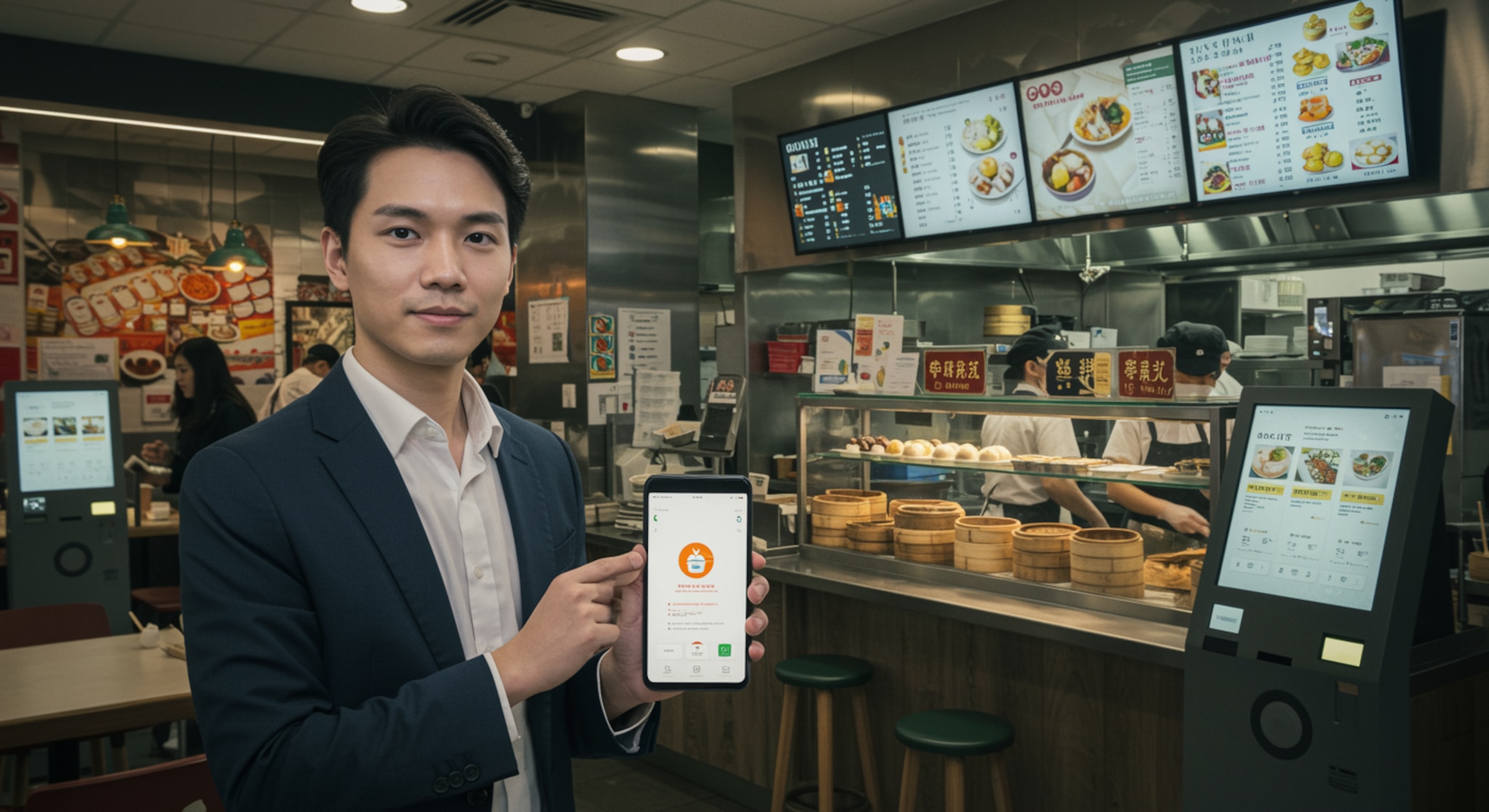
O2O marketing stands for Online to Offline marketing O2O marketing. It’s a strategy where businesses use online channels, like websites, apps, social media, email, or ads, to attract potential customers and then drive them to complete their purchase or interaction in an physical location, like store or restaurant. Given a typical O2O marketing example, a restaurant runs Facebook ads with a “Book a Table” button → people reserve online → they come dine in the physical restaurant.
Such marketing method creates a vibrant connection between your online presence and the actual dining experience. In Hong Kong, 46% of consumers looking for flexible dining, restaurants have to adapt, making the special experience that O2O marketing brings even more essential for F&B owners in HK. The customers expect a smooth blend of online and offline experiences, things like online booking, real-time availability checks on mobile apps, and digital promos that entice online browsers to become in-person diners.
Large F&B groups are also adapting themselves for this trend. McDonald's Hong Kong's "Mobile Order and Pick Up" is a prime example, letting customers order digitally and pick up in store effortlessly. The success of delivery platforms also underscores the potential of O2O: Foodpanda saw around 35% pickup orders in 2023, while Deliveroo boosted their pickup orders from 15% to over 40% through targeted campaigns.
Digital Marketing Returns in Hong Kong
Digital marketing is booming in Hong Kong's F&B sector. Search advertising reached $670 million USD in 2024 (a 10.5% rise), and social media advertising hit $580 million USD (up 13.7%), showing restaurateurs' confidence in digital ROI. The Hong Kong Tourism Board found that restaurants using O2O strategies bounced back 23% faster after the pandemic than those relying solely on traditional methods.
The delivery market is projected to reach $$4.41 billion by 2025, growing at 6.86% annually, suggesting sustainable revenue potential through O2O. Food delivery in Hong Kong now accounts for 45% of food service revenue, demonstrating successful revenue diversification. New success metrics have emerged: restaurants with integrated O2O systems boast 34% higher profit margins, thanks to better operational efficiency and customer data use.
O2O vs Traditional
| Marketing Channel | Average CPM | Conversion Rate | Customer Acquisition Cost | ROI Timeline |
|---|---|---|---|---|
| O2O Digital Integration | $8-15 | 3.5-8% | $25-45 | 2-4 months |
| Social Media Ads | $10-25 | 2.8-6% | $30-60 | 3-6 months |
| Print/Radio | $35-80 | 0.8-2.1% | $80-150 | 6-12 months |
| Direct Mail | $40-120 | 1.2-3.2% | $90-200 | 8-15 months |
*Source: Restaurant Marketing Association 2024 and industry benchmarks
Calculating ROI of O2O Marketing
To effectively measure your marketing efforts, try these formulas:
-
Customer Acquisition Cost (CAC): Marketing expenses / Total new customers
-
Marketing ROI: (Engagement or sales from campaign / Cost of campaign) * 100
-
Customer Lifetime Value (CLV): Average order value * Purchase frequency * Customer lifespan
-
Net Promoter Score (NPS): % of promoters - % of detractors (Industry average: 42)
-
Table Turnover Rate: Total parties served / Total tables
-
Digital Attribution Rate: Revenue from digital / Total revenue * 100
Tips to Maximize Your O2O Marketing Campaign
1. Use Integrated Systems
Restaurant Technology Report shows that restaurants with integrated O2O platforms experience significant improvements: a 27% drop in operational costs through automated inventory management, a 31% boost in staff productivity thanks to streamlined workflows, and a 19% reduction in food waste via predictive analytics. These systems deliver real-time cost insights across all channels, giving you a clear picture of your marketing effectiveness.
Eats365's cloud-based POS offers 300+ configurable settings, uniting all your restaurant operations on a single platform. This gives you a complete view of your costs, something a traditional cash register can't do. The Coffee Academïcs get detailed, real-time sales reports for all their locations thanks to this integrated approach, while Ruby Tuesday Hong Kong saw a 16% jump in table turnover and a 22% boost in loyal customers using AI-powered personalization.
2. Optimizing for Each Platform
Savvy restaurants focus on the major delivery platforms, where 75% of customers plan to order more often. Uber Eats has quadrupled its user base and Foodpanda added 1,500 new restaurants, seeing a 200% increase in order volume. Tracking this shift, where 56% of Hong Kong consumers say they're ordering more via apps, provides crucial product feedback for menu adjustments.
Deloitte Digital's research suggests that optimizing across multiple O2O platforms leads to 42% better customer retention and 38% larger average order values versus focusing on a single platform. Unified data analytics is key, tracking customers across all touchpoints so you can base your marketing budget on real conversions, not just last-click assumptions.
3. Targeting Your Neighborhood
O2O marketing tools are revolutionizing restaurant promotions with laser-focused hyper-local targeting. In a dense city like Hong Kong, this offers amazing precision. For example, a dim sum place in Causeway Bay could tailor lunch specials to nearby office workers, or a seafood restaurant in Tuen Mun could customize weekend offers for local families.
Hong Kong's unparalleled digital environment offers exceptional targeting. With 17.4 million mobile internet users in a city of 7.4 million – and 48.4% of them shopping online weekly – restaurants have a massive, digitally savvy audience eager for personalized experiences.
4. Tailoring Your Message
OpenRice is still a go-to for local diners – authentic reviews are king here. Xiaohongshu attracts a younger Chinese audience looking for visually appealing dining experiences, emphasizing the importance of strong imagery. Instagram serves as your visual menu for international foodie;s while Facebook helps build community and market events. Each platform needs its own unique voice: a playful Instagram reel, a detailed OpenRice review, an engaging Facebook event post.
5. Analyze Your Customers
Modern restaurant marketing goes way beyond simple demographics. Using AI-driven personalization, you can now follow intricate customer behaviors – from what they view online to what they order in person. This allows for predictive recommendations that feel natural, not intrusive.
Value-based bidding becomes a powerful tool. You're not just throwing out generic promotions; you're maximizing return on ad spend (ROAS) and customer lifetime value (CLV). A smart system might, for example, offer premium sake deals to a regular sushi lover, while promoting set lunch menu items to the budget-conscious crowd.
Elevate the Hong Kong Dining Experience with Eats365
Streamline operations and enhance customer engagement with Eats365's POS system. From QR code ordering to a comprehensive CRM, Eats365 empowers Hong Kong F&B businesses to thrive in the competitive O2O landscape. Contact us today to learn how Eats365 can optimize your restaurant's digital strategy and maximize your ROI.
FAQs about What is O2O in Restaurant Marketing
Q: What is O2O marketing and why is it important for restaurants?
A: O2O marketing stands for Online-to-Offline marketing. It connects online engagement with physical dining experiences, guiding customers from digital platforms to visit restaurants in person. This strategy boosts customer loyalty, enhances brand reputation, and increases revenue by creating seamless, personalized journeys between online and offline interactions.
Q: How does O2O marketing improve customer loyalty and sales in Hong Kong's F&B sector?
A: In Hong Kong, O2O marketing caters to digitally savvy consumers by combining online booking, targeted promos, and real-time availability. This personalized approach leads to quicker customer engagement, higher conversion rates, and stronger loyalty. For example, delivery platforms like Foodpanda and Deliveroo successfully use O2O campaigns to increase pickup orders and repeat customers.
Q: What are the key ROI advantages of using O2O marketing compared to traditional methods?
A: O2O marketing delivers faster returns and better cost efficiency. For instance, McDonald's Hong Kong increased in-app orders by 550% and cut acquisition costs by 63% using O2O campaigns. Restaurants applying these strategies typically see 10-15% revenue growth annually, outperforming the 2-5% growth of traditional marketing while reducing overall marketing expenses.
Q: How can Eats365 help restaurants implement effective O2O marketing strategies?
A: Eats365 offers an integrated cloud-based POS system that unifies online and offline restaurant operations. It provides real-time sales data, customer behavior analytics, and performance tracking across all channels. This enables restaurants to optimize marketing spend, personalize campaigns, improve table turnover, and increase customer retention through data-driven O2O strategies.
Q: What features does Eats365 provide to support O2O marketing and cost tracking?
A: Eats365’s platform includes 300+ configurable settings, allowing restaurants to track costs and customer data in real time. It supports AI-powered personalization, detailed BI dashboards, and multi-location management. These features help restaurants measure marketing effectiveness accurately and improve operational efficiency, reducing waste and boosting profitability.
Q: What role does hyper-local geolocation marketing play in O2O strategies in Hong Kong?
A: Hyper-local geolocation marketing targets customers near a restaurant’s physical location with customized offers and promotions. In a dense, digitally connected city like Hong Kong, this allows restaurants to tailor campaigns to nearby office workers or local families, driving relevant foot traffic and enhancing the customer experience through highly precise, location-based digital engagement.