Stop Losing Bookings: Which HK App Wins in 2026?
Losing bookings to no-shows and poor management costs Hong Kong restaurants dearly. Discover how using the right booking app with automated reminders, real-time availability, and POS integration can improve your operations in 2026.
 05 Feb 2026

 Eats365
Contents
- 3 Critical Features to Prevent Lost Reservations
- How Much Do Restaurant Reservation Systems Cost in Hong Kong
- Which Restaurant Booking App Wins in 2026
- OpenRice
- Bistrochat
- Oddle
- inline
- How Integrated POS Data Improves Seating Efficiency
- Seamless Reservations and Integrated Operations for Your Hong Kong Restaurant
- People Also Asked
3 Critical Features to Prevent Lost Reservations
-
Automated Confirmations and Reminders: Instant SMS and email notifications provide guests with clear booking details, while reminders sent 24–48 hours in advance significantly reduce no-show rates by allowing easy modifications or cancellations.
-
Secure Payment and Deposit Rules: Protecting revenue during peak periods, these tools allow restaurants to enforce credit card holds or deposits for large parties and special menus, ensuring diners commit to their reservations.
-
Digital Waitlist Management: Replacing manual queues with digital systems provides guests with accurate wait times and SMS updates, helping restaurants capture walk-ins and reduce walkout rates by up to 20%.
How Much Do Restaurant Reservation Systems Cost in Hong Kong?
The price trends for restaurant reservation systems in Hong Kong in 2025 show diversification. The monthly fee model is still the mainstream pricing model, but the pay-per-reservation model is also gradually becoming popular. In addition, transaction fees and additional feature fees are increasingly prominent. Generally speaking, the monthly fee budget for small restaurants is around HKD $600 - $1000, for medium-sized restaurants around HKD $1000 - $2000, and for large restaurants it may exceed HKD $2000. Setup fees are usually between HKD $0 - $500, depending on the system provider.
How to Evaluate the Overall Cost of a Reservation System:
-
Monthly Fee: Consider the system's monthly fee and whether there are any discounts or offers.
-
Setup Fee: Consider the system's setup fee and whether there are any additional charges.
-
Transaction Fee: Consider the system's transaction fee and whether it will affect the order amount.
-
Additional Feature Fees: Consider whether you need to pay extra to unlock advanced features, such as report analysis and customized services.
-
Maintenance Fee: Consider the system's maintenance fee and whether you need to hire professional technicians for maintenance.
Which Restaurant Booking App Wins in 2026?
Hong Kong restaurant owners face a crowded marketplace of booking platforms, each claiming to solve the same problem: preventing lost revenue from missed reservations and poor table management. A 5% no-show rate across 100 weekly reservations costs your restaurant $1,500+ per week. A right booking app can help stop that bleeding.
| Brand | Pricing Model | Transaction Fee | Key Strength | Best For |
|---|---|---|---|---|
| OpenRice | Monthly Subscription | Per-cover commission (approx. HK$5-15) | Massive local reach & discovery | New customer acquisition |
| Bistrochat | Flat Subscription (from HK$550) | HK$0 | Omni-channel (WhatsApp/IG) AI Chat | Reducing admin for social bookings |
| Oddle | Usage-based / No monthly fee | $0.30–$0.60 per cover | Data ownership & CRM focus | Independent brands & loyalty |
| inline | Custom Subscription | HK$0 (varies by plan) | Operational control & floor plans | High-volume floor management |
OpenRice
OpenRice remains the market leader by sheer volume and user reach. With over 2 million restaurants across Asia, the platform gives your restaurant exposure to an enormous diner base. The app handles basic reservation, table seating data, and mobile payments through OpenRice Pay. Guests earn Rice Dollars rewards (typically $1 per attended seat), creating an incentive to show up.
However, OpenRice charges transaction fees on top of its subscription model. For restaurants prioritizing customer acquisition and willing to accept ongoing per-cover charges, this model works. The real cost emerges during peak periods when commission stacks up across high reservation volumes. Bilingual support (English, Traditional Chinese, Simplified Chinese) comes standard, and setup takes minimal time since most Hong Kong diners already use the app.
The down side is: with OpenRice, you're competing with thousands of other restaurants on the same platform, and your brand messaging can feel diluted in a crowded feed.
Bistrochat
Bistrochat takes a different approach by consolidating bookings from WhatsApp, WeChat, Facebook, and Instagram into a single dashboard. This matters because your guests live on messaging apps, and not necessarily on specialised restaurant platforms. Bistrochat's service also includes a built-in AI chatbot that handles booking confirmations, updates, and cancellations across WhatsApp, Line, WeChat, Telegram, Zalo, Messenger, and Instagram in 16+ languages.
Bistrochat's subscription model (starting around HK$550/month per venue) avoids per-cover fees, making costs predictable for budgeting. Their guest loyalty features let you track repeat customers and send targeted promotions without requiring a separate app.
For multi-location operators, the platform consolidates across venues while maintaining independent scheduling. Real-time table visualization and automatic conflict detection prevent the double-bookings that plague manual systems. The platform integrates with POS systems, though restaurants should verify compatibility with their specific hardware before committing.
Oddle
Oddle positions itself as the "own your data" alternative to app-based commission models. Instead of booking guests through someone else's platform, Oddle helps restaurants own every reservation, delivery order, and customer profile. This matters strategically because the restaurant managers get to control marketing retargeting and loyalty campaigns directly! The CRM captures dining history, preferences, and spending patterns, letting staff deliver personalised service on repeat visits.
Oddle's usage-based pricing model charges per booking (typically $0.30–$0.60 per cover depending on volume tier), with no monthly minimums. For restaurants with inconsistent reservation volumes or seasonal fluctuations, this reduces fixed costs. Advanced features like pre-payment collection, flexible card guarantees, and ticketed event sales (super practical for Chinese New Year or special menus) come built in. Integration with your POS syncs reservation details, special requests, and dietary notes to your kitchen automatically.
inline
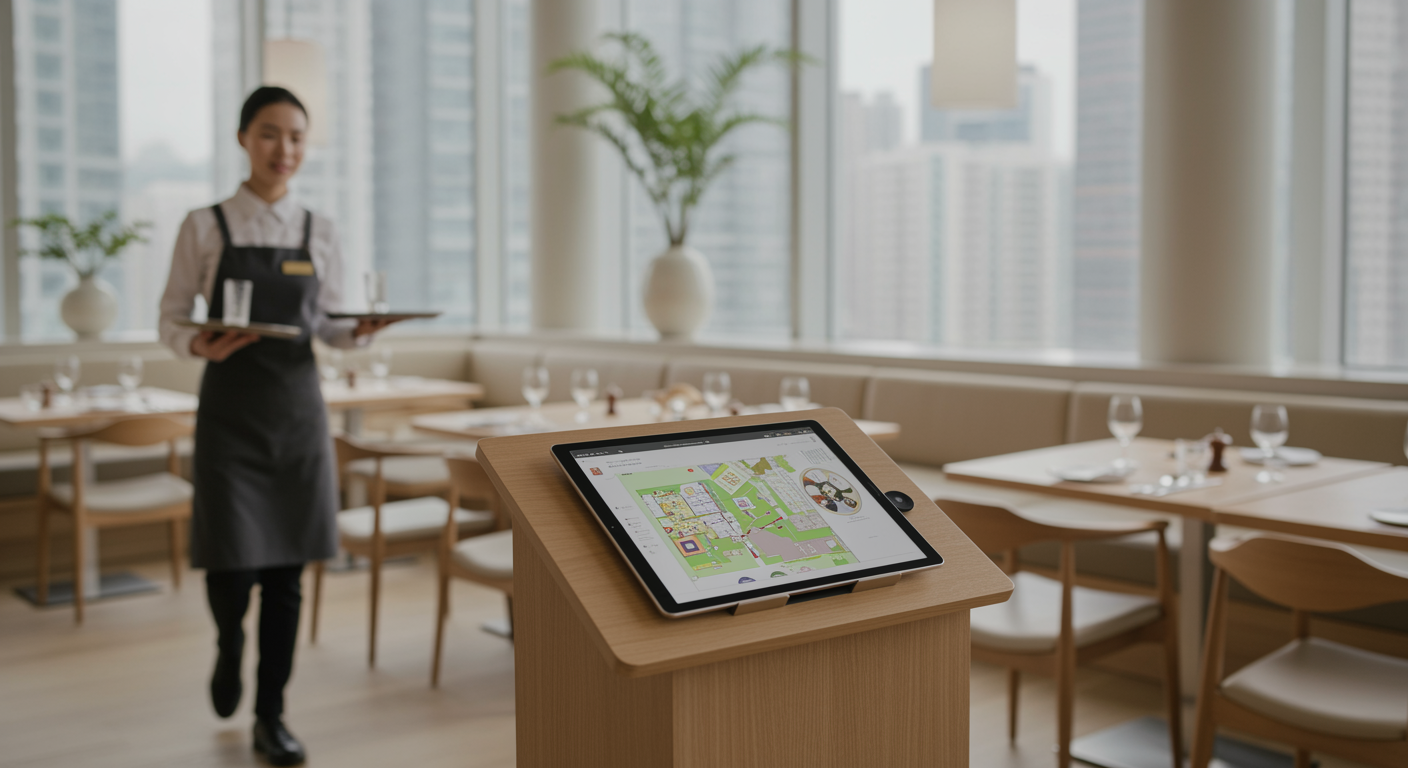
inline excels at real-time operational control and deposit automation. The visual table floor-plan editor lets hosts see your exact dining room layout, instantly identifying which tables are available, occupied, or reserved—crucial during chaotic peak service. Digital waitlist management displays queue numbers on TV screens and sends guests SMS updates when their table is ready, reducing crowding outside your door. Deposit and credit card hold features reduce no-shows dramatically because guests commit money upfront.
The system flags risk-prone bookings (large parties, late bookings, first-time guests) and can auto-require deposits selectively. Real-time synchronization with your Eats365 POS or compatible systems keeps kitchen and front-of-house aligned. Inline also provides14-day free trial removes setup risk, and pricing customization means you can negotiate terms that match your revenue model. Bilingual interfaces and straightforward payment processing (Apple Pay, Google Pay, card terminals) accommodate both local diners and international visitors.
How Integrated POS Data Improves Seating Efficiency
-
Single Source of Truth: Syncing booking tools with the POS ensures table statuses (seated, cleaning, available) update automatically in real-time, eliminating manual double-handling and reducing errors during peak service hours.
-
Unified Operational Flow: Integrations allow reservations to appear directly on the POS floor plan, cutting data entry time and ensuring kitchen and front-of-house teams remain aligned on guest needs and party sizes.
-
Enhanced Guest Profiles (360-View): Linking reservations to POS data surfaces visit history and dietary preferences instantly, enabling servers to provide personalized service and recognize VIPs without interrupting the flow of service.
Seamless Reservations and Integrated Operations for Your Hong Kong Restaurant
In the dynamic Hong Kong F&B scene, an integrated approach to reservations is no longer optional. By uniting your reservation platform with a reliable POS system like Eats365, you can eliminate double-handling, use a cloud-based POS for real-time table management, and significantly reduce operational friction. Our solutions help your team focus on delivering excellent service, maximising every table turn, and building lasting customer loyalty. To discover how Eats365 can improve your restaurant's efficiency and profitability, we encourage you to send an inquiry today.
People Also Asked
Q: What are the most efficient restaurant booking apps that can automatically handle reservations in Hong Kong for 2026?
OpenRice, Bistrochat, Oddle and inline are the top choices. OpenRice delivers broad diner reach and mobile payments; Bistrochat consolidates WhatsApp/WeChat/Instagram bookings with an AI chatbot and real-time conflict detection; Oddle focuses on owning reservation data with CRM, POS sync and pre-payment options; inline provides visual floor plans, real-time seat status and automated deposits.
Q: How can I reduce no-shows and improve booking efficiency for my restaurant in Hong Kong?
Activate automated SMS/email confirmations with a reminder 24–48 hours before service, require deposits or card holds for peak slots and large parties, and replace paper queues with a digital waitlist that texts guests when tables are ready; also integrate your booking app with the POS so table status is unified and manual double-entry is eliminated.
Q: Compare top restaurant booking apps in Hong Kong: Which one provides the most seamless real-time seat availability updates?
inline offers the most seamless real-time seat availability: its visual table floor‑plan editor, digital waitlist with SMS updates, selective deposit automation and real‑time sync with Eats365 or compatible POS systems give hosts an instant, accurate view of available, occupied and freeing tables.
Q: What are the pricing plans for restaurant booking apps that work best in the Hong Kong market?
OpenRice uses subscription plus per‑cover transaction fees; Bistrochat is a subscription model starting around HK$550/month per venue (no per‑cover fees); Oddle uses usage‑based pricing at about $0.30–$0.60 per cover with no monthly minimums; inline offers customizable pricing with a 14‑day free trial.
Q: Does Eats365 integrate with popular Point of Sale systems for restaurant bookings in Hong Kong?
Yes—Eats365’s Hong Kong setup supports integrations between its POS and major local reservation platforms (including OpenRice and TheGulu), enabling reservations to appear on the POS floor plan and synchronising table status, guest names and booking notes.
Q: What features should I look for in a restaurant booking app to prevent lost reservations in 2026?
-
Automated SMS and email confirmations plus at least one reminder to reduce no‑shows
-
Secure payment rules: deposits and credit‑card holds for peak times or large parties
-
Digital waitlist management with SMS updates to capture walk‑ins and reduce walkouts
-
Real‑time POS integration and table‑management so table status is a single source of truth
-
CRM/guest‑360 linkage to surface visit history and preferences at seating