Cafe Trends 2026: Winning the Grab-and-Go War
Feeling the rush in Singapore's cafes? See how the "grab-and-go" trend is changing the industry, pushing cafes to fit into smaller footprints, run tighter layouts, and use smoother tech to win over time-poor customers.
 13 Jan 2026

 Eats365
Contents
High-velocity grab-and-go reshapes Singapore’s cafe model
Singapore’s cafe market is tilting toward high-efficiency, limited-service models. To remain competitive by 2026, operators must pivot toward these core grab-and-go shifts:
-
Micro-Formats and Strategic Locations: Driven by URA’s transit-oriented developments, cafes are shrinking into kiosk formats near MRT gantries and CBD lobbies to trade seating for high throughput Urban Redevelopment Authority.
-
Subscription-Based Habits: Local roasters and providers like 7 Grams Coffee are using bean and machine subscriptions to turn coffee into a daily pickup ritual. Cafes use app-based passes to predict spikes and move regulars through in under a minute.
-
Mobile Order & Pay (MOP) Integration: With MAS supporting digital payments like PayNow, QR-based ordering has become the default Monetary Authority of Singapore – FinTech. Platforms like Waitrr allow customers to order in seconds, while integrated POS systems like Eats365 sync these orders directly to barista displays.
-
Contactless Fulfillment: To meet the demand for minimal friction, cafes are adopting self-ordering kiosks and even smart, temperature-controlled lockers for click-and-collect orders Smart lockers Singapore. This aligns the entire layout around a 60–90 second handover window.
3 Reasons Traditional Workflows Fail High-Volume Cafes
Reason 1: Shared Counters Create Congestion
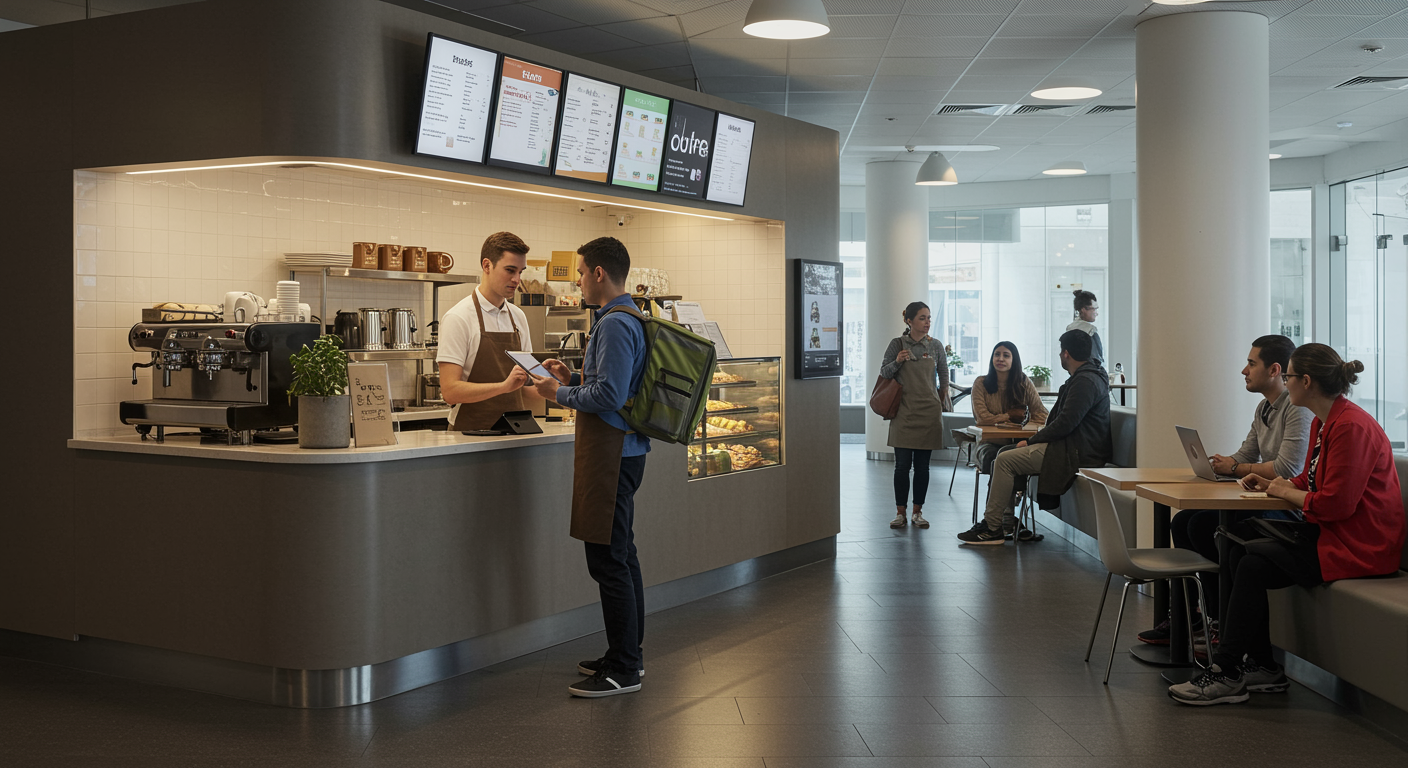
When cafes add mobile ordering without redesigning their physical space, the main counter becomes a bottleneck. Delivery riders, walk-in customers, and pre-order pickups all clash in the same narrow area. Design experts suggest that carving out a dedicated pickup shelf or a specific segment of the counter—clearly separated from the POS—is essential to reduce this friction design a restaurant for delivery and takeout. This keeps the queue moving and prevents dine-in guests from feeling overwhelmed by delivery bags.
Reason 2: Reliance on Paper Tickets During Peak Surges
Traditional paper dockets fail once digital order volume exceeds barista capacity. Without a Kitchen Display System (KDS), orders are easily missed or sequenced incorrectly. A KDS pulls all online and in-store orders into one real-time, time-prioritized queue what is a KDS system. Advanced platforms like Eats365 allow operators to throttle digital order flow or automatically adjust prep times during lunch rushes, ensuring the espresso line stays manageable. Kitchen Display System (KDS): Why Your Restaurant Kitchen Needs It.
Reason 3: Lack of Clear Visual Guidance
Even a well-designed pickup zone fails if customers and riders don't know where to go. This leads to people shouting order numbers across the counter or crowding the till. Digital signage solves this by displaying "Now Preparing" and "Ready for Pickup" status lists in real-time digital signage in restaurants. By combining these screens with visible floor markings or arrows, cafes turn chaotic peaks into a predictable, self-guided flow.
Powering Your Cafe's Grab-and-Go Revolution
To thrive in Singapore's competitive grab-and-go cafe market, adopt a solid and integrated solution. Eats365's cloud-based POS system Singapore, paired with QR code ordering and a Kitchen Display System, helps cafes streamline operations, cut wait times, and give customers a smoother pickup experience. We might suggest reaching out to Eats365 to see how their tools fit your layout and peak patterns, and whether a pilot at one outlet would be a good first step to win the grab-and-go war.
FAQs about Grab-and-Go Trend in Singapore
Q: What are the top grab-and-go strategies transforming Singapore's cafe scene in 2026?
By 2026, the market will be dominated by micro-cafes located in high-traffic CBD lobbies and MRT stations. Successful operators are trading seating for throughput by using compact kiosks and dedicated pickup shelves to separate walk-ins from delivery riders. Furthermore, cafes are leveraging subscription models and prepaid coffee bundles to stabilize revenue and predict morning spikes, ensuring orders are fulfilled within a 60–90 second window.
Q: Best practices for implementing grab-and-go ordering systems in Singapore's competitive cafe market
Implementation starts with a physical redesign to create a dedicated "order-ahead" zone near the entrance. It is critical to integrate your POS with a Kitchen Display System (KDS) so that all channels—mobile, kiosk, and counter—feed into a single, real-time queue. Best practices also include using digital menu Singapore to direct traffic and training staff to use bold, POS-synced order codes on cups for easy identification.
Q: Which POS systems are most effective for streamlining grab-and-go operations in Singapore cafes?
Eats365 is a leading choice for modern cafes because it links mobile ordering directly to barista and kitchen displays. Effective systems must be able to:
-
Queue dine-in and takeaway orders on a single screen.
-
Support local payment methods like PayNow and e-wallets.
-
Automate prep time adjustments and throttle digital orders to prevent kitchen burnout.
Q: Trends in mobile ordering and contactless pickup for Singapore cafes in 2026
Mobile Order & Pay has become the urban standard, with many customers ordering via QR codes in under 20 seconds. Beyond simple app orders, the trend is moving toward fully contactless fulfillment. This includes the use of temperature-controlled smart lockers and "pay-first" QR menus for dine-in settings. Currently, nearly two-thirds of Singaporean consumers prefer using self-service kiosks or mobile ordering over traditional counter interactions.