How Eats365 + Supy Integration Eliminates Manual Inventory and Protects Your Margins
Why let manual inventory management inflate your food cost? Eats365 + Supy links your POS directly to your inventory, turning reactive management into proactive, data-driven growth.
 28 Apr 2026

 Zeyno
Zeyno
Contents
Pain Points that All Restaurant Managers Face with Disconnected Systems
The Pain Points of Disconnected Operations:
- Manual Data Silos: POS and inventory systems that don't talk, requiring hours of manual data entry.
- The Reaction Gap: Financial leaks and margin problems are only discovered weeks later in monthly reports.
- High Error Rates: Manual transfers between systems lead to inventory records that don't reflect actual stock.
- Silent Profit Killers: Food waste (averaging 4-10% of revenue) goes unmonitored due to a lack of live sales linking.
In F&B, the difference between a brand that scales and one that stagnates is rarely about the food. It's about data - specifically, how quickly operators can see what's happening, understand why, and act before the damage is done.
Most restaurant groups today operate with a structural blind spot. They have a POS system generating thousands of transactions per day and an inventory tool managing stock. But these two systems exist in separate worlds, connected only by manual entry - a process that is slow, error-prone, and fundamentally reactive. The consequence? By the time a margin problem surfaces in a monthly report, it has already compounded for weeks.
The traditional tech stack for a restaurant group often relies on a human being to manually transfer data between systems. This is where the margin bleeds out. Manual data entry introduces error rates that lead to inventory records that don't reflect reality.
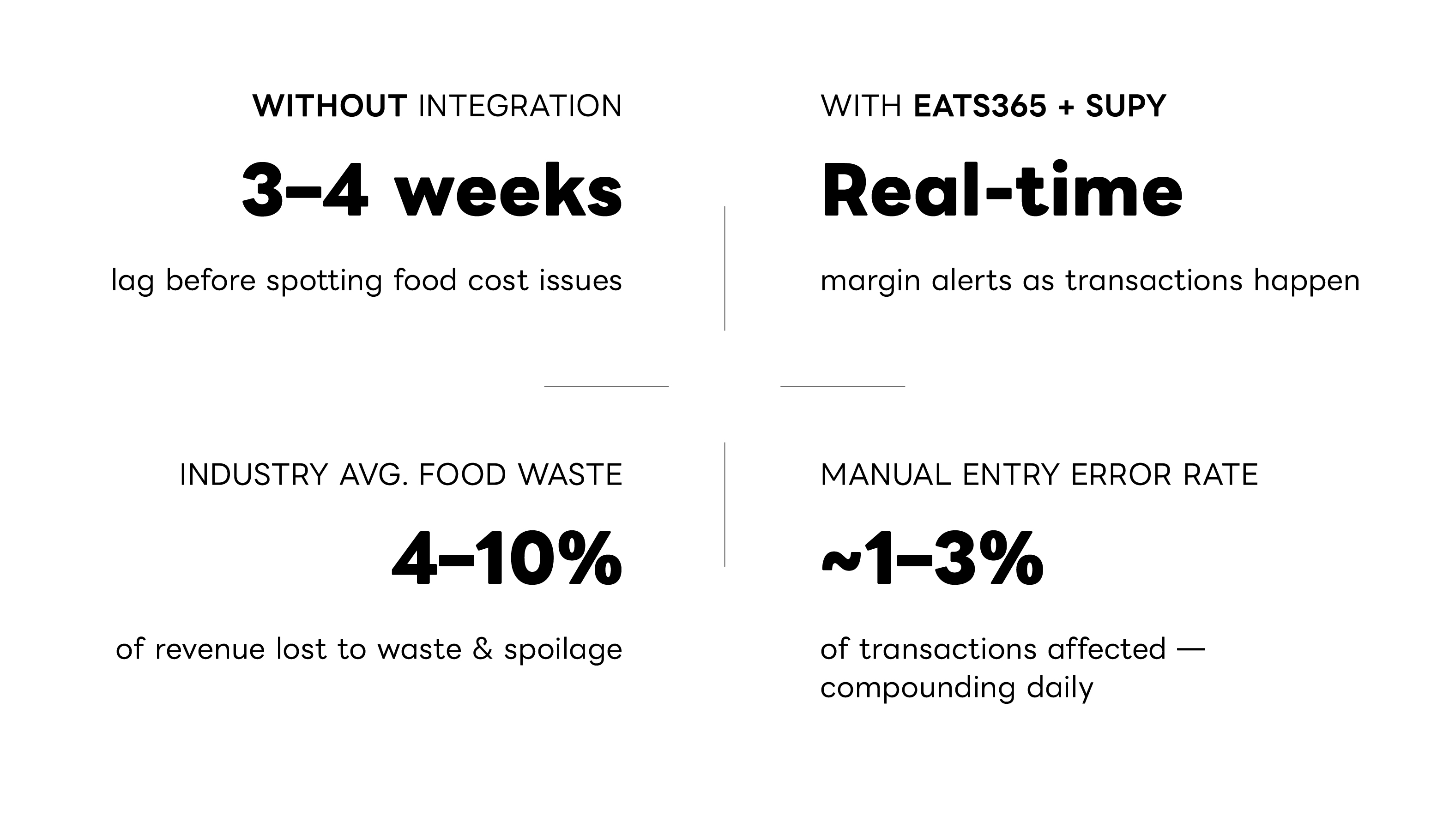
When procurement isn't linked to live sales, food waste, which already averages 4% to 10% of revenue across the industry, becomes a silent profit killer. The Eats365 and Supy integration eliminates this guesswork. For operators already using Eats365, connecting Supy means the team on the floor doesn't change how they work. The integration runs in the background, keeping stock levels accurate without adding a single administrative task.
The partnership between Eats365 and Supy is built to close this gap entirely, driving sustainable growth by moving away from fragmented spreadsheets toward a digital "single source of truth" that supports long-term, scalable operations.
How Eats365 + Supy Maximizes Your Restaurant Profitability
Eats365 is the front-of-house engine: a modular, enterprise-grade POS platform that handles every order channel - from self-ordering kiosks to tableside service - with the reliability that high-volume operators demand.
Supy is what happens the moment a transaction is processed. As a leading AI-powered inventory and procurement platform operating across 40+ countries, Supy is purpose-built to help restaurant groups protect their margins through real-time insights.
Key Integration Benefits:
- Real-time operational control across locations: Automates inventory reconciliation and provides a unified dashboard for multi-site visibility.
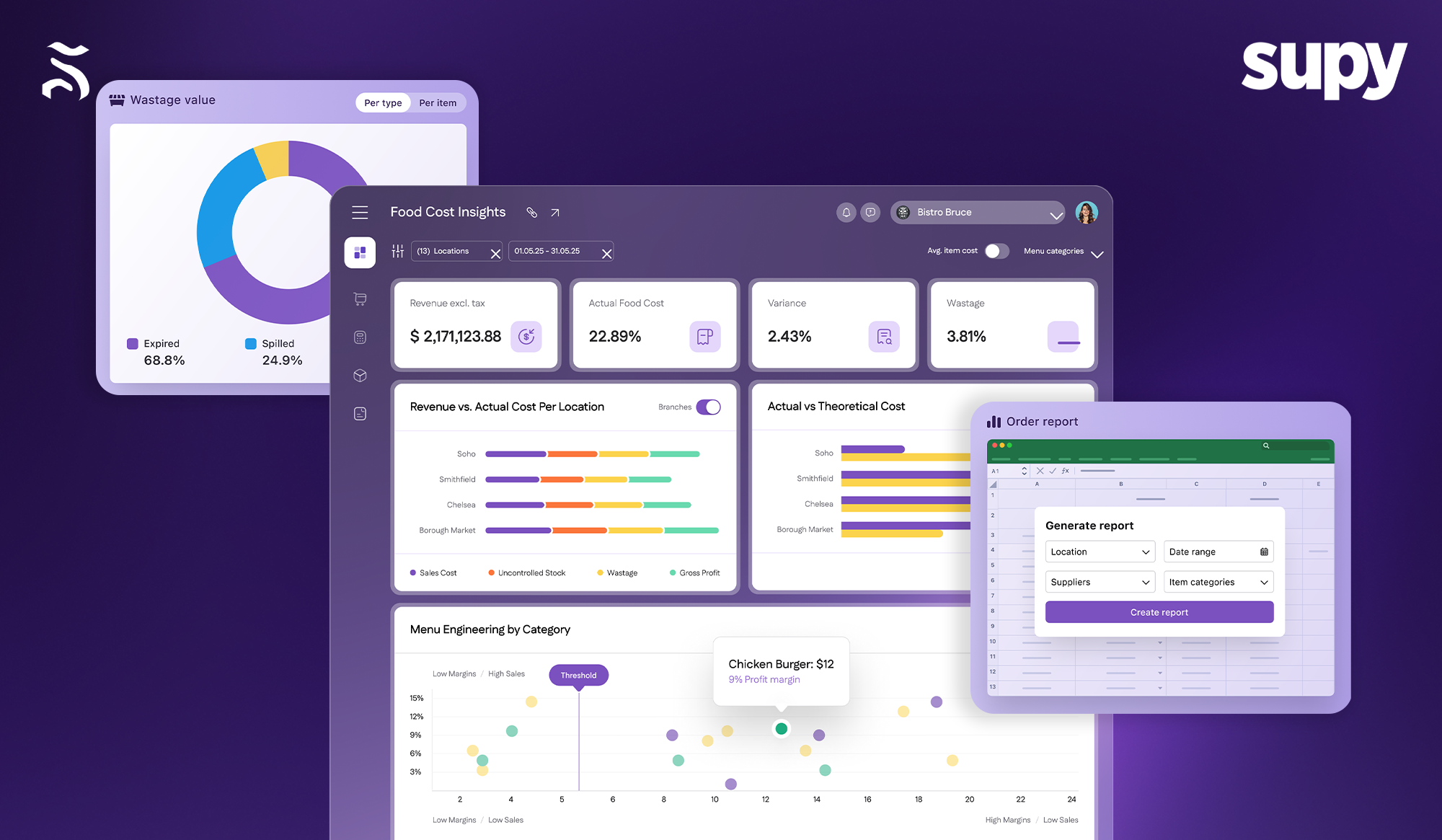
- Real-time profit monitor: Instant visibility into food costs and price fluctuations, allowing for immediate menu or supplier adjustments.
- Smarter procurement: Data-driven procurement based on actual consumption, featuring automated purchase orders and price tracking.
- AI forecasting and predictive ordering: Predict sales 14 days ahead by branch and menu item, then convert that forecast into purchase orders automatically - with full manager override at every level.
Where Eats365 captures what's sold, Supy turns that data into operational control.
Every transaction flows directly from the POS into Supy - automatically depleting inventory based on recipe structures and tracking food cost in real time. This level of automation is critical for minimizing food waste; by anchoring procurement to live sales data, operators can proactively reduce spoilage and ensure inventory moves at its peak freshness.
When Eats365 and Supy operate together, every transaction captured at the front of house instantly drives inventory depletion at the recipe level in Supy. This creates something most operators have never had: a real-time picture of their operation, from the front counter to the back shelf.
Real-time operational control, Across Every Location
The most expensive thing a busy kitchen team does isn't cooking - it's the administrative overhead of reconciling what was sold against what was used. With a live integration between Eats365 and Supy, that reconciliation happens automatically. Stock levels update the moment a transaction is processed. There is no gap between what happened on the floor and what the system reflects.
For multi-location operators, this matters even more. Each outlet's data flows into Supy's unified dashboard, giving management consolidated, real-time visibility across every site - without chasing down reports from individual locations.
Margins in Real Time
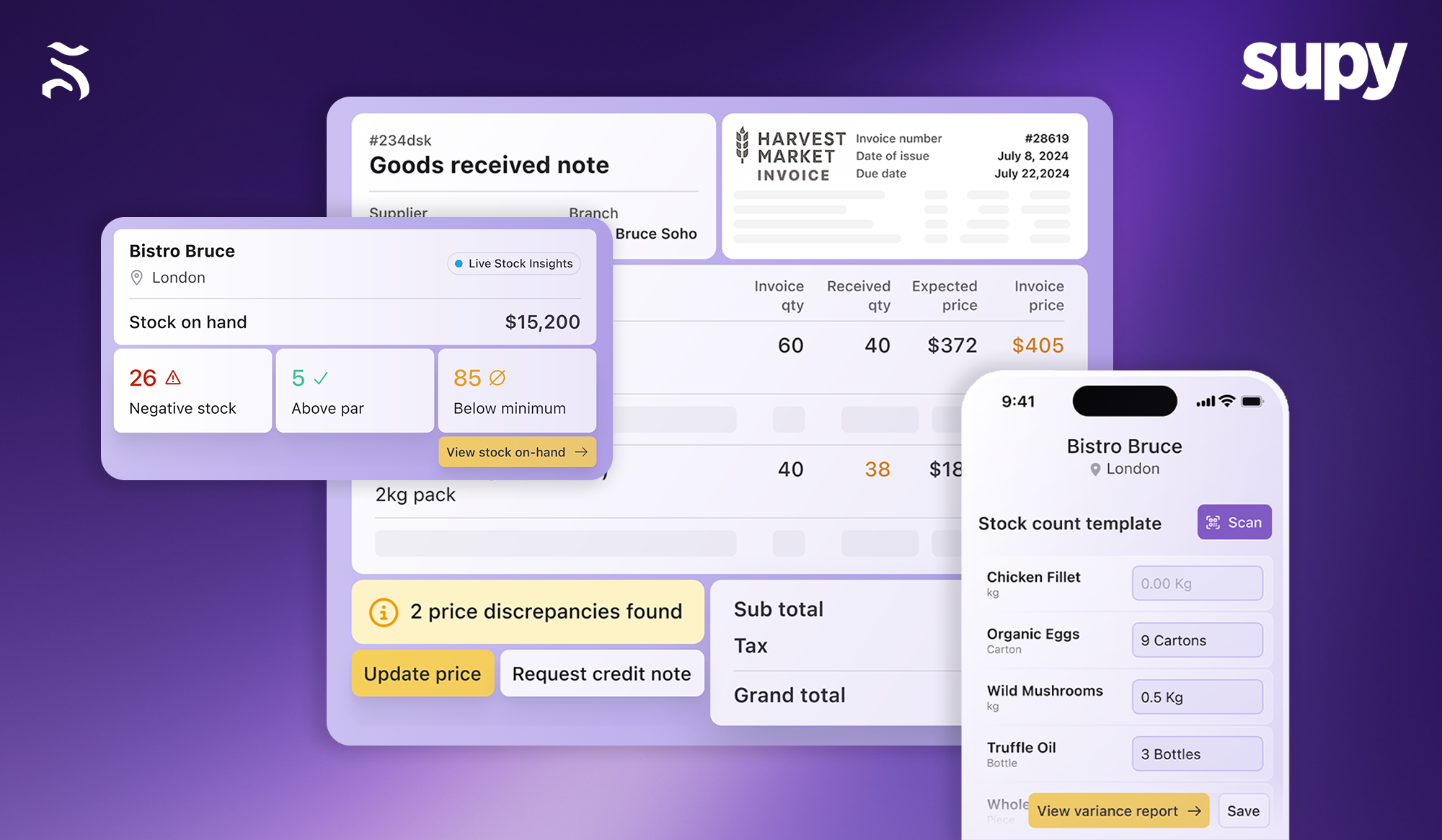
Most operators don't know their true food cost until the end of the month. By then, the damage is already done.
When a supplier raises the price on a key ingredient, Supy surfaces the margin impact on affected dishes immediately. When a specific menu item shows a growing variance between its theoretical and actual food cost. Operators can respond on the spot: adjust a recipe, renegotiate with a supplier, or reprice a dish before the loss compounds. The goal is simple - faster, more confident decisions, made while there's still time to act.
Smarter purchasing and supplier management
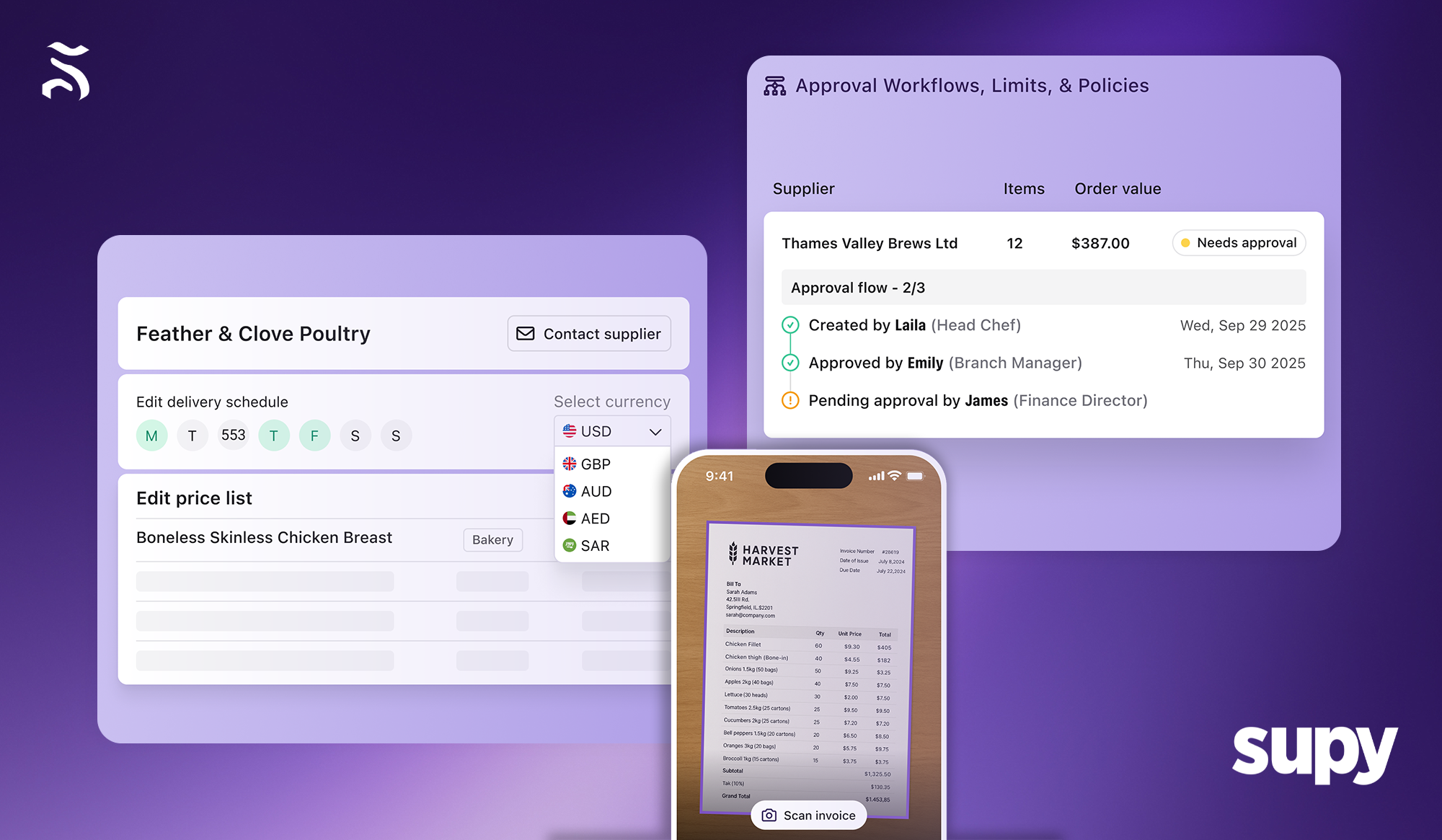
Supy's procurement tools give operators tighter control over the entire purchasing cycle - from automated purchase orders triggered by stock thresholds to supplier price tracking that flags cost increases the moment they occur. When this is connected to live Eats365 sales data, purchasing decisions are no longer based on intuition or last week's count. They're based on what's actually being consumed, right now, at each location.
Know what you'll sell before you order it
Most operators order on instinct. Last week's numbers, a gut feel for the weekend, and a hope that it lands close enough.
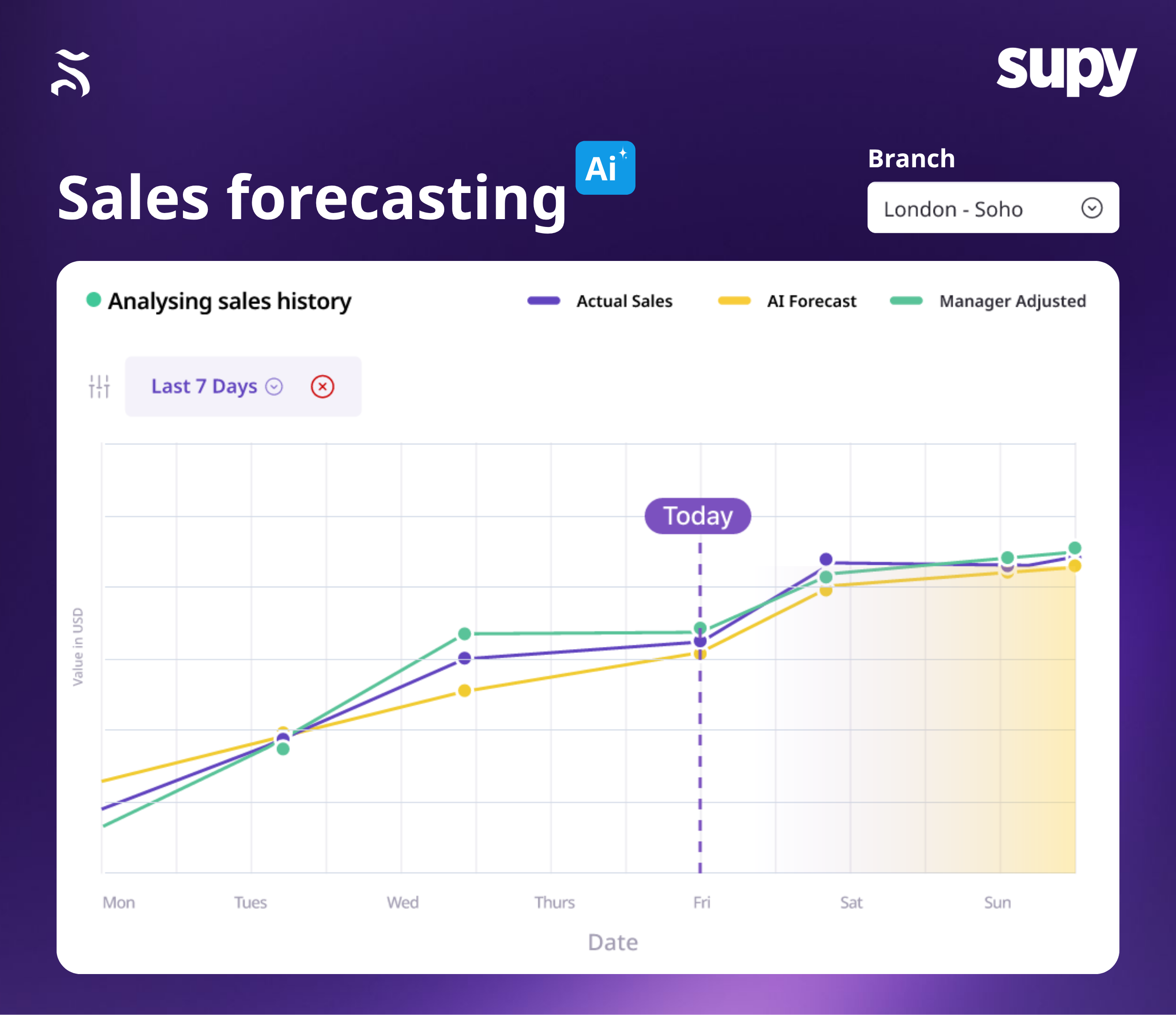
Supy's AI Sales Forecasting removes the guesswork. It reads your full Eats365 sales history and predicts what each branch will sell over the next 14 days - broken down to individual menu items, not just a daily total. Managers stay in control: know something the AI doesn't, like a local event or a promo? Adjust any day by percentage or value, or override quantities item by item.
From there, AI Predictive Ordering turns that forecast into ready-to-submit purchase orders for every supplier, calculating exact quantities against current stock, delivery dates, and coverage periods.
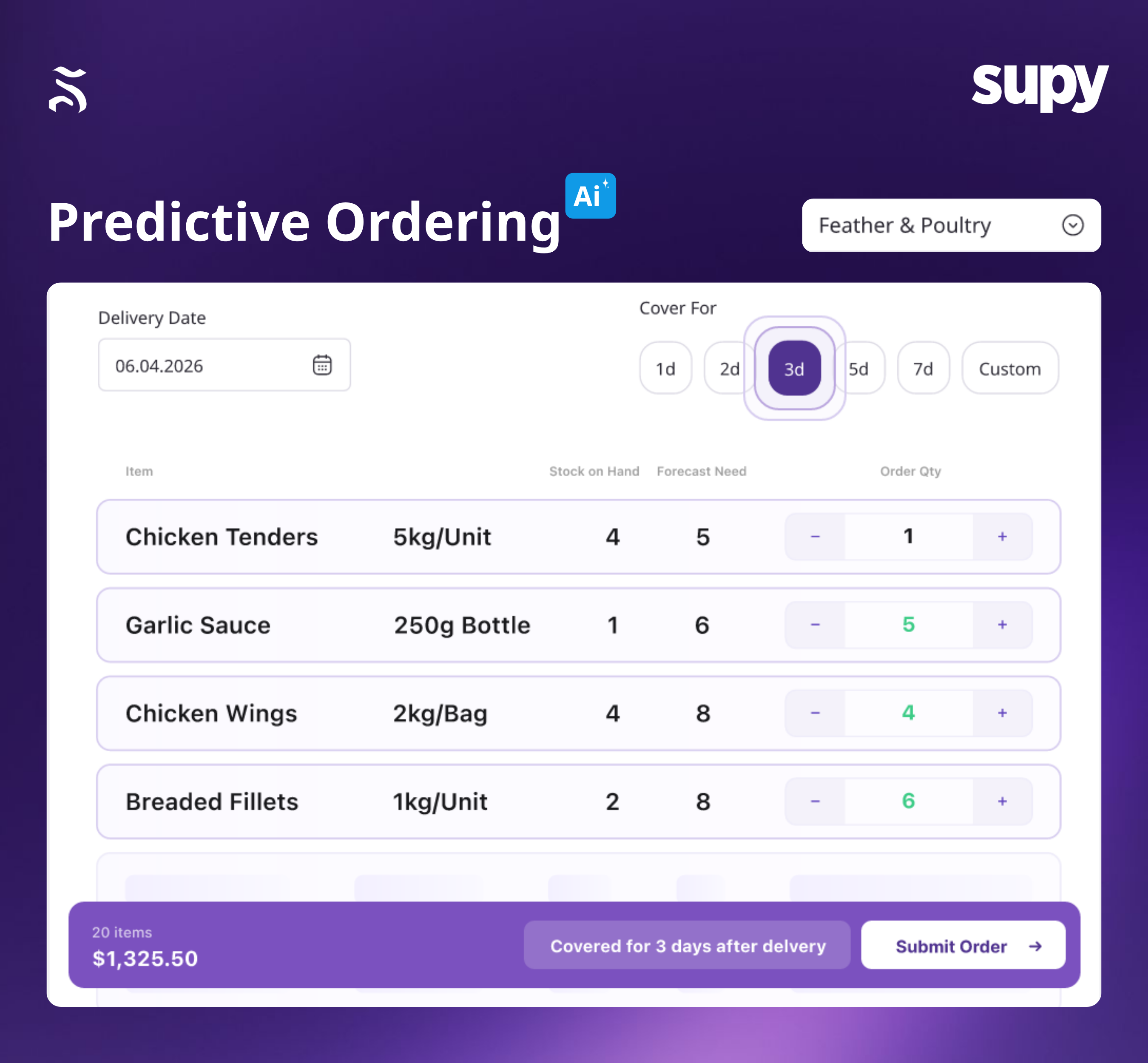
The model improves every week, checking its own forecast against what actually sold. Never over-stocked, never under-stocked.
Case Study | How Bakehouse Streamlines High-Volume Operations with Eats365 + Supy
How the Eats365 and Supy integration powers Bakehouse’s daily operations:
- Precision Inventory Control: Eliminates over-ordering and stockouts for time-sensitive, artisanal products.
- Seamless Scalability: New locations are integrated into the existing data layer without rebuilding workflows.
- Reduced Admin Burden: High-volume sales data syncs automatically, freeing staff from manual reconciliation.
- Cross-Location Clarity: Management maintains consistent food cost visibility across all Hong Kong outlets.
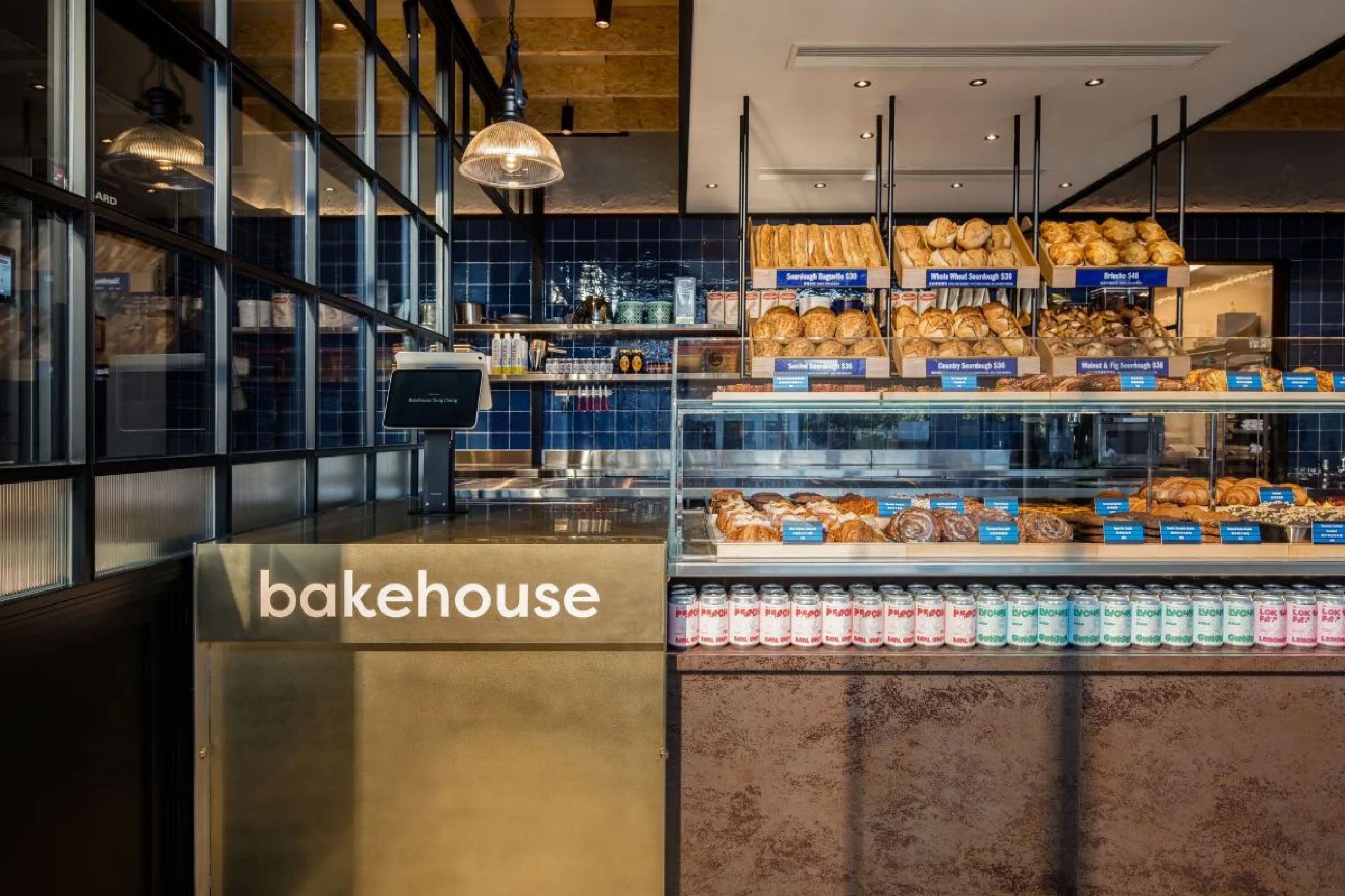
Bakehouse Hong Kong is a brand that operates at the intersection of exceptional volume and artisanal quality - a combination that creates unique operational complexity. Every day, across multiple busy outlets, they manage fresh, time-sensitive inventory with almost no margin for error. Over-order and you have waste. Under-order and you have stockouts. Get the timing wrong, and quality suffers.
As one of our shared clients, Bakehouse leverages Eats365's robust POS capabilities alongside Supy's inventory and procurement tools to manage the full complexity of a high-volume, multi-location bakery. The result is an operation that keeps both the guest experience and back-of-house efficiency at the highest level - simultaneously, and without expanding the administrative burden on their team.
Adding a new location doesn't mean adding new manual processes. Because the POS and inventory system share a live data layer, scaling is a matter of extending the system - not rebuilding the workflow. Food cost visibility is consistent across every outlet, and management has the cross-location clarity needed to stay focused on quality and growth, rather than chasing down operational noise.
Read more: Multi-Location QSRs: Picking the Best POS in Malaysia 2026 (eats365pos.com)
See What These Benefits Look Like in Your Restaurant
Having the right tools is one thing. Getting them to talk to each other is what actually changes how your restaurant runs. That’s exactly what the Eats365 and Supy integration delivers - a solid, connected foundation.
The combined value is significant: less time spent on administrative tasks, tighter control over supplier relationships, and the ability to make faster, more confident decisions. For growing restaurant groups managing multiple locations, this kind of front-to-back visibility is the difference between reacting to problems and preventing them entirely.
Ready to see how the Eats365 & Supy integration can help your operation? Get in touch for a walkthrough built around your specific business model.