Booking App or Bust? Why Integrated Marketing Ideas Win in 2026's Hungry Market
Many Singapore restaurants are discovering that crowded booking apps and busy weekends can still hide a silent drain on profit when reservations, marketing tools and the POS all run on separate islands of data.
 26 Jan 2026

 Eats365
Contents
- The marketing blind spot you can’t see on a tablet
- Operational friction vs. real hospitality
- Why integration is more than a nice-to-have
- How to Turn Reservations into Automated Retention Engines
- Centralize to Survive: Streamlining Multi-Channel Campaigns
- Centralizing for Success in Singapore's F&B Scene
- FAQs about Integrated Marketing Ideas
When your reservation app, delivery marketplace console, e-voucher system and POS do not talk to each other, you end up with classic data silos: each tool knows a bit about the guest, but no one system sees the full picture. In practice, that means your marketing spend in Singapore — from Google ads to influencer promos to partnerships with booking apps — cannot be tied cleanly to what matters most: repeat visits and actual dollars spent in your dining room.
The marketing blind spot you can’t see on a tablet
With standalone booking apps, you can usually see who booked and how they found you, but the data often stops there. Because the reservation system is not linked to the POS, it cannot reliably answer questions like:
-
Did this guest order a quick set lunch, or host a $600 family dinner?
-
Did they come back three times after your 1-for-1 campaign on a specific channel?
-
Are your best-spending regulars coming from Instagram, Google Maps, your own website, or a marketplace app?
This is the essence of data silos: information is trapped in separate systems, making it difficult to assemble a complete view of performance or customers. For a typical SG restaurant that juggles bookings from walk-ins, WhatsApp, platforms and corporate concierge services, this blind spot means you cannot confidently attribute a repeat visit or a higher spend to a specific campaign or channel — so budget decisions become guesswork instead of evidence-based.
Operational friction vs. real hospitality
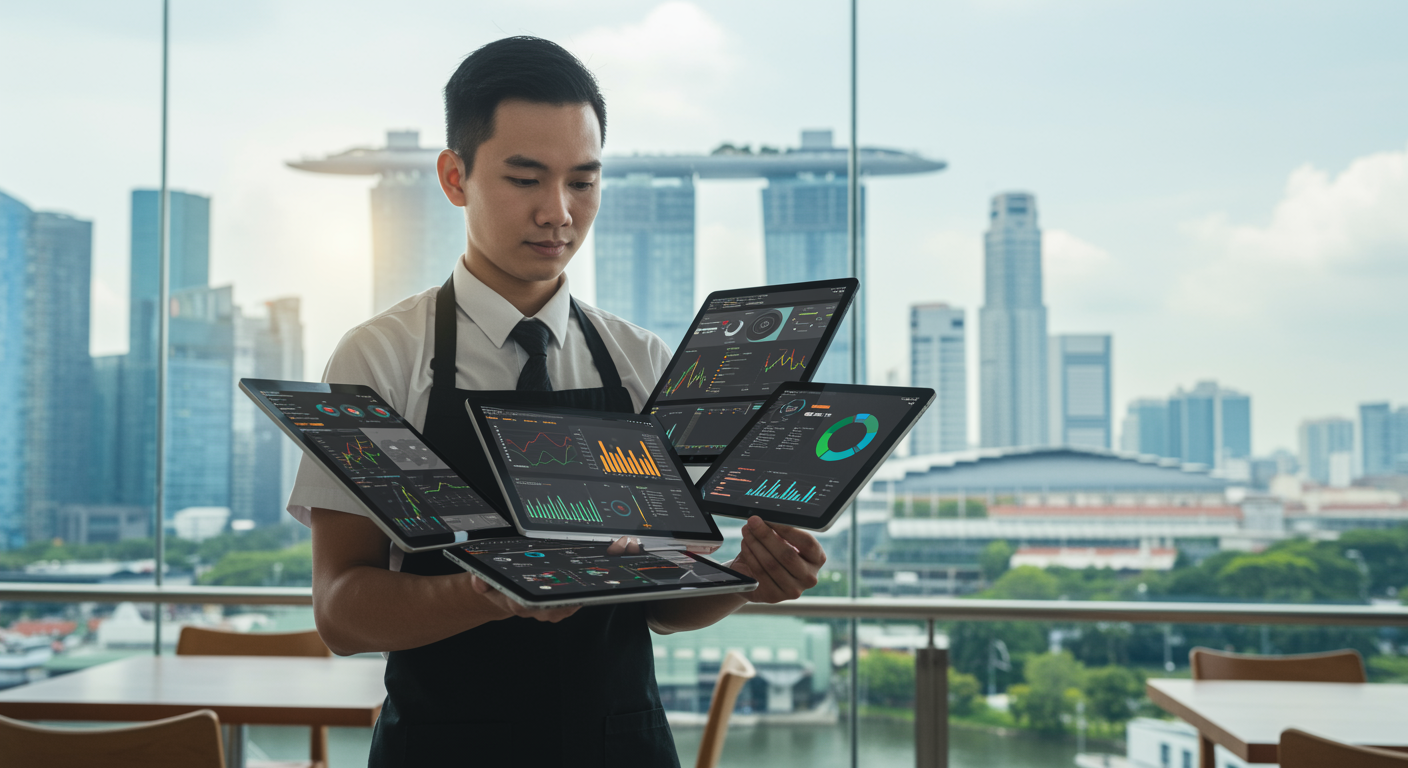
On the floor, fragmentation shows up as friction. Staff check one tablet for reservations, another for delivery orders, then jump into a separate dashboard to view vouchers or loyalty points, while the POS handles only the bill. Each system has a different interface and login, so during peak periods at a CBD lunch rush or a packed Friday night in Tanjong Pagar, this bouncing between screens slows service. It also hurts the guest experience because teams have less time and attention to provide genuine hospitality.
More importantly, without an integrated profile at the POS, staff can’t easily recognise VIPs or high-value regulars. A guest who always spends big on wine or frequently brings corporate groups may look like a first-timer on the booking app if they booked through a different channel today. Instead of greeting them by name, preparing their usual seating preference or alerting the manager, the team treats them like any walk-in. Over time, this erodes loyalty — not because you don’t care, but because your tools don’t surface the right data at the right moment.
Why integration is more than a nice-to-have
From a pure numbers perspective, the goal of all this technology is to improve Marketing ROI — the return generated by your marketing investment. But you cannot calculate true ROI if revenue and customer behaviour live in a different system from your booking and campaign data. Only when bookings, campaigns and the POS are integrated can you track Customer Lifetime Value (CLV) properly:
-
How much a guest spends over 6–12 months, not just on their first visit
-
How their behaviour changes after a promo, event, or partnership with a booking platform
-
Which channels bring in high-CLV regulars versus low-margin, one-time deal hunters
In Singapore’s competitive F&B landscape, where rents and wages are high, this unified view becomes a financial necessity. Integrated booking and POS data lets you identify your most profitable guest segments, double down on the channels that bring them in, and quietly scale back on noisy but low-value promotions. The technology discussion then shifts from “Which booking app gives me the most visibility?” to “Which combination of tools helps me build and retain the right customers at the right cost?”, aligning your marketing decisions directly with long-term profitability rather than surface-level traffic.
How to Turn Reservations into Automated Retention Engines?
-
Capture the Right Data at Booking
Ensure your booking flow collects fields that matter (visit frequency, group size, allergies, occasion, preferred items). Captured data should feed directly into a central CRM so every reservation creates a meaningful guest profile. -
Sync Profiles to a Central CRM and POS
Push reservation details into the POS/CRM in real time so service staff and marketers access the same unified profile. This single source of truth prevents repeat guests from appearing as first-timers and enables accurate reporting. -
Automate Timed Outreach
Use last-visit date, spend and occasion triggers to send context-aware nudges (e.g., "we miss you" offers after 30 days or exclusive previews for high spenders). Automation keeps your brand top-of-mind without manual follow-up. -
Personalise Offers Based on Behaviour
Leverage past orders and preferences for targeted incentives: small personalised perks for returning couples, upsell offers for large groups, or wine suggestions for known spenders. Personalisation drives both spend and loyalty, supported by global evidence on its effectiveness. -
Make Membership Seamless
Convert bookings into membership enrolments so guests see points, tiers and rewards before arrival. Integrated loyalty—visible at booking and at the POS—boosts engagement in a market accustomed to bank and mall rewards.
Centralize to Survive: Streamlining Multi-Channel Campaigns
Managing campaigns across platforms like GrabFood, Foodpanda, and Chope is only sustainable when coordinated through a single POS brain. Eats365's extensive integration ecosystem acts as your central hub to unify every digital and physical touchpoint into one system of record.
Unified Operations and Logistics
Eats365 transforms fragmented operations into a unified workflow by funneling orders from delivery partners and booking apps directly into one kitchen stack. This centralized brain automates table management and syncs reservations from Chope or Quandoo to optimize seating automatically. By consolidating every channel, you eliminate the need for staff to juggle multiple tablets or manual spreadsheets. Your front-of-house team can finally prioritize guest hospitality instead of constantly monitoring screen alerts.
Data-Driven Marketing Intelligence
Consolidating every transaction into a single source of truth allows you to measure the true profitability of third-party marketplace discounts. You can easily identify which channels drive repeat visits and which promotions might be cannibalizing your dine-in sales. This structured data also simplifies reporting for investors and provides the clear business records required to qualify for digitalization grants from IMDA and Enterprise Singapore. Having all your data in one core system ensures your marketing decisions are backed by facts rather than guesswork.
Precise Campaign Execution
Centralization ensures your brand remains consistent across kiosks, QR menus, and online ordering platforms. You can launch time-bound deals instantly and ensure that sold-out items disappear from every digital menu at the same time to prevent customer disappointment. By applying universal loyalty and voucher logic, you guarantee that every guest receives a seamless experience whether they order at the counter or through a booking link. This precision removes the risk of promotional errors and protects your brand reputation.
Scalable and Flexible Infrastructure
The open API and extensive partner marketplace protect your restaurant from being locked into outdated tools. You can easily integrate the latest reservation or marketing automation apps as they gain popularity in the local market without re-platforming your entire stack. This agile architecture prevents the accumulation of tech debt and ensures your technology remains nimble. As customer expectations shift, your business stays ready to adopt the next generation of restaurant technology.
Centralizing for Success in Singapore's F&B Scene
In Singapore's dynamic F&B market, optimizing operations and customer engagement is paramount. With Eats365's integrated POS system Singapore, restaurants can eliminate data silos by connecting booking apps, online ordering, and loyalty programs into a single, unified platform. This seamless integration empowers restaurant owners to gain actionable insights, streamline marketing efforts, and ultimately enhance profitability. Discover how Eats365 can transform your restaurant's efficiency and customer loyalty by sending us an inquiry today!
FAQs about Integrated Marketing Ideas
Q: What are the most effective marketing integration strategies for restaurants in Singapore to boost customer loyalty?
Centralise bookings, delivery, vouchers and POS data into a single system so every tool shares a complete guest profile; use the booking flow to capture key fields (visit frequency, party size, preferences) and sync them to your CRM; automate timely follow-ups (e.g. 30‑day “we miss you” messages, early access for high spenders); run consistent promotions and membership/points logic across dine‑in, delivery and online; and choose an open, API‑ready POS hub so new apps can be plugged in without replatforming.
Q: How can restaurants connect booking apps with their marketing campaigns to increase repeat visits?
Push reservation details into a central CRM/POS, capture custom fields at booking, then trigger automated email/SMS or mobile‑wallet offers based on last visit, spend or occasion. Use the booking flow to enrol members so points and tier benefits are visible before arrival, and tailor follow-ups (complimentary dessert for returning couples, bottle discounts for large groups) to drive repeat visits.
Q: Why do disconnected restaurant tech tools hurt marketing performance?
Data silos mean no single system sees full customer behaviour, so you can’t attribute repeat visits or spend to specific channels, calculate CLV or measure true Marketing ROI. Operationally, staff waste time switching between tablets and miss VIP cues, which erodes loyalty; overall marketing decisions become guesswork instead of evidence‑based.
Q: Can integrated booking and POS systems actually improve restaurant marketing ROI?
Yes. Integration lets you track customer lifetime value, attribute campaigns to real revenue and repeat visits, identify profitable channels, and stop spending on low‑value promotions — all of which turn marketing from guesswork into measurable ROI.
Q: How can Singapore restaurants create instant personalized offers using tech integration?
When booking confirmations flow to your CRM in real time, you can auto‑send tailored mobile wallet vouchers or membership perks at booking based on past spend, party size or preferences. This real‑time sync and automation makes personalized, context‑aware offers immediate and low‑friction for guests.
Q: Can Eats365 help streamline marketing campaigns across different restaurant platforms?
Yes. Eats365 acts as a central POS hub that pulls real‑time orders and customer activity from booking apps, delivery platforms, QR ordering, kiosks and in‑store POS into one system of record. That centralisation lets you push consistent time‑bound deals across channels, enforce item availability and voucher rules everywhere, run cleaner reports to attribute campaigns, and plug new marketing tools via APIs without overhauling your stack.