Corkage Fee or Beverage Sales: Balancing Profit Margins
Struggling to balance inviting BYOB policies with maintaining healthy beverage profits in Singapore? Read on for practical corkage pricing, licensing essentials, and sensible tactics to make BYOB work for your bottom line.
 25 Feb 2026

 Eats365
Contents
Market Trends of Alcohol in Singapore
Singapore’s alcohol taxes push many diners to think twice before ordering wine by the bottle. As of 2021, excise duty for wine is S$88 per litre of alcohol, which raises retail and restaurant prices. Restaurants then add rent, service and glassware costs, so wine lists often look much pricier than bottles in retail shops. Singapore charges excise duty on alcohol by alcoholic strength, so higher‑ABV wines and spirits become even more expensive.
Because of that gap between restaurant and retail prices, BYOB has become common in Singapore’s wine scene. Local media even publish lists of restaurants with free corkage, which shows how normal BYOB has become for many diners. Guests with home cellars or who buy from specialist importers often prefer to drink bottles they already trust. They will pay a reasonable corkage fee if the restaurant provides proper glassware, careful service and an easygoing policy.
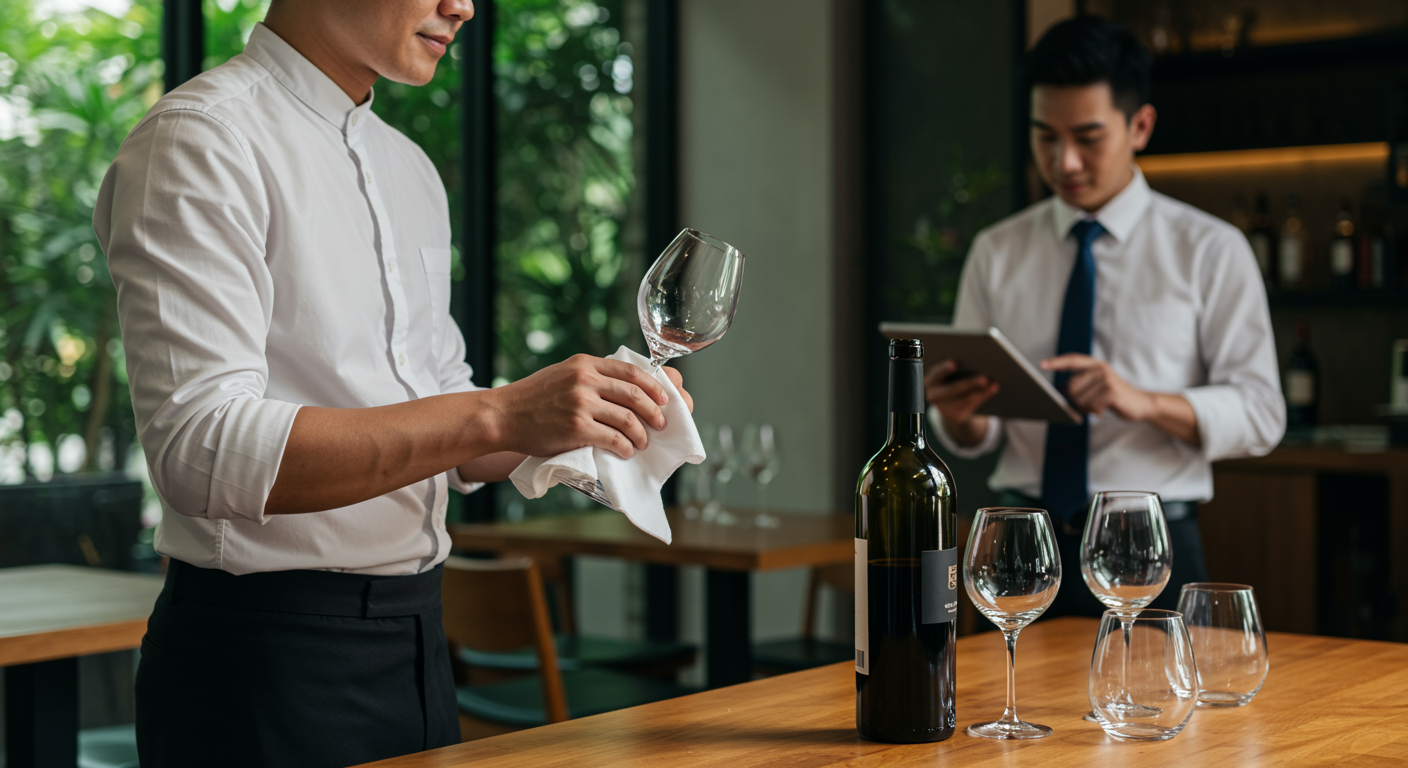
From the restaurant side, BYOB still brings real costs that managers should track. Staff must present and pour the wine, polish stems, wash fragile glassware and deal with any breakage or spills. If you have a sommelier or trained wine captain, their time and skill add to the expense. Many operators use their POS, such as Eats365’s reporting tools, to compare corkage income with beverage sales and staff hours so they can see whether BYOB is helping or hurting margins.
Pros and Cons of Accepting BYOB
Allowing BYOB in Singapore can draw more diners, but it changes how you earn from drinks. Beverage markups in restaurants often range from 300% to 400%, so corkage rarely replaces those margins.
Upsides of BYOB
-
You can attract larger groups and corporate clients, especially in CBD areas, who often order more sharing plates and higher-priced mains. With thin F&B margins of around 3–6% in many operations, extra food spend matters in Singapore restaurants.
-
You reduce the need to hold slow-moving wine or spirits, which frees up cash and cuts the risk of bottles that never sell.
Downsides of BYOB
-
You give up high drink margins, since house wine, cocktails and soft drinks usually bring much stronger profits than food, helped by 300% to 400% beverage markups.
-
Service can slow when guests bring wines that need chilling, special stemware, or careful decanting. That pulls staff away from other tables during peak hours.
-
Corkage income rarely equals traditional beverage profit, so treat BYOB mainly as a guest-attraction tool and measure its real cost with your POS.
Think of BYOB as a way to bring in specific customer segments rather than a primary revenue source. Set clear rules—limit bottles per table, charge a fair corkage, and consider restricting BYOB to wine—then review the policy’s effect on profit and service every few months.
Licensing Requirements for BYOB
Some operators assume BYOB is unregulated because they do not sell the alcohol directly. But the Liquor Control Act 2015, the GoBusiness liquor-licence guide and an Eats365 Singapore article on BYOB all make clear that licensing rules still apply.
In Singapore, Class 1A, 1B, 2A and 2B licences cover supply of liquor for consumption at the premises, during hours set by the licence. SPF licence categories and licence conditions show that all liquor consumed on those premises, whether sold by you or brought in by guests, must meet the same rules.
If your restaurant is licensed, SPF conditions say you must not allow liquor to be consumed on the premises beyond approved trading hours. SPF licence conditions and display rules mean BYOB drinking must stop once your licensed hours end.
If you typically allow guests to drink alcohol on-site, even when they bring their own bottles, check whether you need a liquor licence or exemption with the Singapore Police Force licensing unit. The law focuses on how liquor is supplied and consumed, not who paid for it.
Your duty of care does not disappear when customers open their own bottles. As the occupier, you must manage disorderly or very drunk patrons; local legal scholarship discusses common law duty of care and issues around getting drunk in Singapore.
Strategic Pricing for Revenue Protection
1. Setting the Right Corkage Rate
In Singapore, most casual to mid-range restaurants charge between $30 to $50 per bottle, while fine dining venues often set rates at $80 or higher. Match your corkage to your menu prices and venue positioning. If your wine list is reasonably priced, a moderate corkage signals that you value in-house purchases without alienating guests who bring a bottle.
2. The 'One-for-One' Strategy
Try a 'one-for-one' waiver: for every bottle customers buy from your wine list, waive the corkage on one BYOB bottle. This rewards guests who support your beverage program while still allowing BYOB. Many restaurants see house wine sales rise after introducing this rule.
3. Controlling Volume with Smart Limits
Limit the number of BYOB bottles per table—usually one to two bottles. This stops BYOB from completely replacing your wine sales. When guests know there’s a clear cap, they often choose to buy additional bottles from your list instead.
4. Making Your Beverage Program Competitive
Make your in-house drinks worth choosing. Offer high-value wine pairing menus that simplify decision-making and often cost less than bringing an equivalent bottle. A curated by-the-glass program using wine preservation tech lets you offer premium labels without waste, so guests can try expensive wines they might otherwise skip. When in-house options are attractive and convenient, BYOB loses some of its appeal.
5. Using Loyalty as a Leverage Point
Reserve corkage waivers as a VIP perk for regulars. This turns corkage rules into a clear loyalty benefit that encourages repeat visits. Regular customers feel appreciated; casual diners see a path to rewards.
5. The Technology Layer: POS Automation
Managing corkage rules by hand invites mistakes and revenue loss. A flexible POS automatically applies waivers when customers meet your criteria—whether they bought a house bottle or reached VIP status. The system records corkage as a distinct line item, so you can compare corkage income with beverage sales and staff hours. Without automation, staff may forget rules during busy shifts and margins take a hit. "Managing a growing F&B brand across different locations is a massive challenge, but Eats365 has made it feel manageable," says Legendary Hong Kong.
Under Singapore's Liquor Control (Supply and Consumption) Act, your establishment must hold a valid liquor licence to allow any alcohol consumption on premises, including BYOB. That legal requirement is another reason to have a clear, written corkage policy: it protects compliance and your revenue.
Optimizing Your Restaurant's Profitability in Singapore
Dealing with corkage and BYOB requires practical tools that simplify operations and protect your margins. Eats365's cloud-based POS system helps Singaporean F&B operators with advanced reporting tools so you can track beverage sales, corkage income and staff efficiency, then adjust policies based on real data. Contact Eats365 today to see how our restaurant POS can help protect margins and improve the guest experience.
General FAQs
Q: What are the pros and cons of implementing a corkage fee policy for restaurants in Singapore?
Pros:
-
Attracts larger groups and corporate clients and can boost food spend.
-
Reduces need to hold slow‑moving wine stock and frees up cash.
Cons:
-
You lose high drink margins (beverage markups commonly 300%–400%).
-
Adds service costs (presenting, pouring, polishing, washing, decanting, sommelier time, breakage) and can slow service during peak hours.
-
Corkage income rarely matches traditional beverage profit, so treat BYOB as a marketing tool and track costs via POS.
Q: What is a typical corkage fee range for restaurants in Singapore?
Most casual to mid‑range venues charge S$30–S$50 per bottle, while fine‑dining restaurants commonly set corkage at S$80 or higher.
Q: How can restaurants create a balanced corkage fee policy that attracts customers while protecting revenue?
Practical steps:
-
Set rates aligned with your menu pricing and venue positioning.
-
Use a 'one‑for‑one' waiver: waive corkage for each house bottle purchased to drive in‑house sales.
-
Limit BYOB bottles per table (typically one to two) to protect wine sales.
-
Make in‑house options more attractive with curated pairing menus and by‑the‑glass programmes using preservation tech.
-
Reserve waivers as VIP loyalty rewards and review financial/service impact regularly.
-
Automate rules in your POS to apply conditional waivers and track corkage versus beverage sales and staff hours.
Q: What legal considerations should Singapore restaurant owners know about implementing corkage fees?
Key legal points:
-
Licensing rules still apply: consumption of alcohol on premises (sold or BYOB) falls under licences such as Class 1A/1B/2A/2B.
-
BYOB drinking must stop after your approved trading hours per licence conditions.
-
Confirm whether you need a liquor licence or exemption with the Singapore Police Force licensing unit.
-
Your duty of care remains: you must manage disorderly or intoxicated patrons even when they bring their own alcohol.
Q: What alternative revenue strategies can restaurants use instead of traditional corkage fees?
Alternatives and complements:
-
Implement the one‑for‑one waiver to increase house bottle sales.
-
Offer high‑value wine pairing menus that make in‑house purchases more attractive.
-
Run a curated by‑the‑glass programme using preservation technology to reduce waste and offer premium choices.
-
Use loyalty tiers to grant corkage waivers to VIPs.
-
Make your beverage programme uniquely appealing so BYOB is less attractive, and use POS automation to apply offers and track performance.