Permit Panic? Launch Your AU Korean Cafe in 30 Days
Dreaming of opening your own Australian Korean cafe in just 30 days? This guide walks you through the practical permit sequence for different states and the food-safety steps you’ll need, so that ambitious goal feels less like a fantasy and more like a plan.
 03 Dec 2025

 Eats365
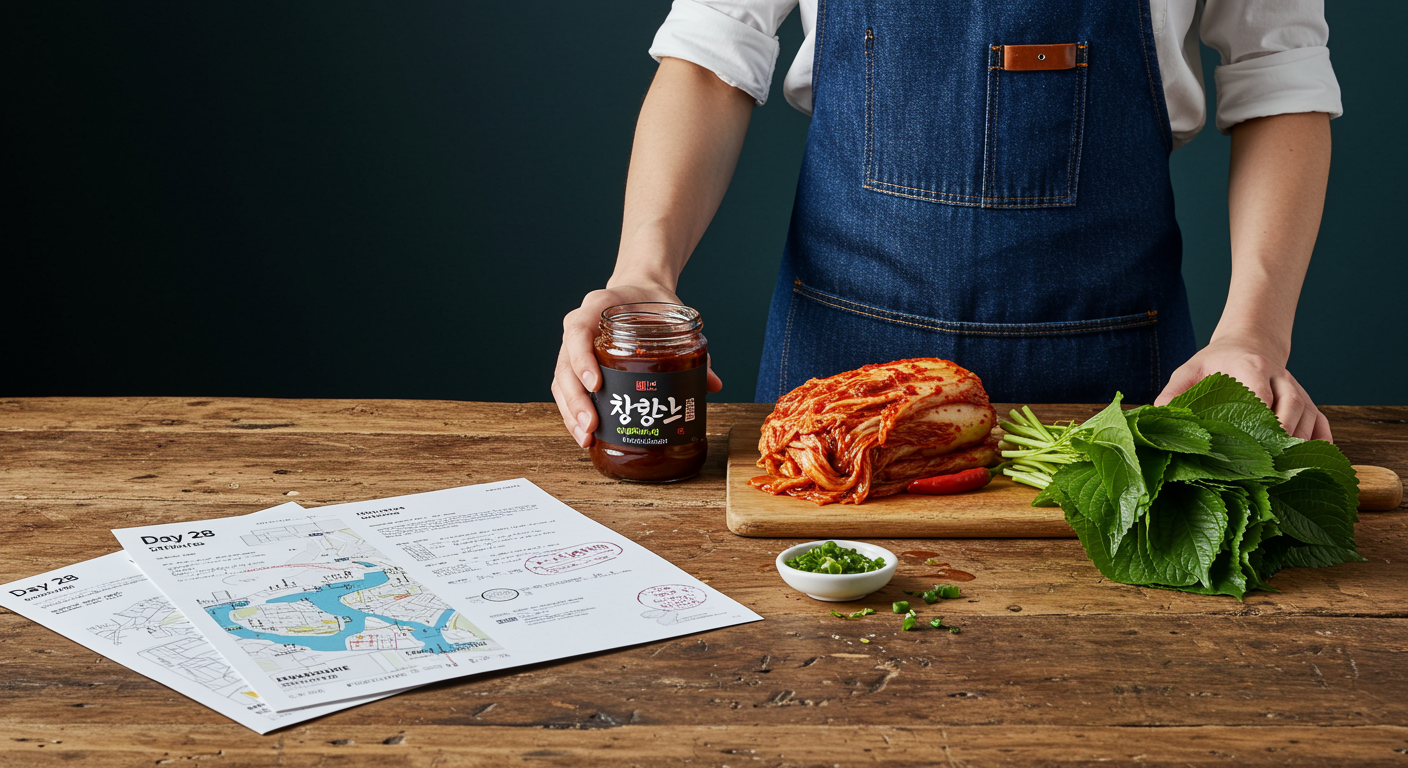
Contents
- 30 days to open your Korean cafe? Here's the permit sequence that works
- Realistic 30-Day Opening Strategy
- Korean cafe compliance: Your food safety playbook for Australian inspections
- Permit costs adding up? Here’s the budget breakdown for Korean cafes
- Streamline Your Korean Cafe's Success with Eats365
- FAQs: Opening a Korean Cafe or Restaurant in Australia
30 days to open your Korean cafe? Here's the permit sequence that works
Opening a Korean cafe in 30 days is doable if you pick the right permit order and move quickly, though expect notable differences between Victoria and New South Wales because their rules and processing speeds aren’t the same.
1. Food Business Registration: Your Essential First Step
before you can legally serve any food. In Victoria, food business registration is managed by your local council, while in New South Wales, you notify the NSW Food Authority or your local council depending on your business type. Expect this registration to take about 3–7 days once you hand in complete paperwork including a council-approved kitchen layout and food safety documents. Your council will class your food business (Victoria uses classes 1–4) and tell you if a food safety supervisor is required. Submitting neat, complete paperwork up front helps you avoid reinspections that can push your opening out beyond 30 days.
2. Parallelize Planning and Liquor License Applications
If you want to hit Day 30, file planning permits and liquor license applications at the same time on Day 1, not one after the other. In Victoria, you apply for a liquor licence through the Victorian Gambling and Casino Control Commission (VGCCC) with a non-refundable application fee starting at $504.30. New South Wales applications go through Liquor & Gaming NSW.
That said, liquor licences are the likely timeline choke-point — processing often takes 60–90 days even if you ask for priority handling. Victoria may allow conditional trading if you meet specified conditions, which can help you open closer to your 30-day aim. In New South Wales you must have completed RSA training and a National Police Check before applying.
3. Melbourne vs. Sydney: Leveraging Regional Advantages
Melbourne gives an edge in some areas: the CBD’s Koreatown is a designated precinct, declared in September 2024. That designation can speed up planning permit approvals because the council has streamlined processes for businesses inside the designated Koreatown precinct. Check with the City of Melbourne for specific planning permit requirements, and timelines depend on how complex your application is.
Sydney is a bit more fragmented — you’ll likely need to negotiate with the specific council for your site. The City of Sydney provides guides for outdoor dining applications, for example. Other councils, such as North Sydney, require public liability insurance of at least $10 million for outdoor dining areas. Expect 2–4 weeks for outdoor seating approval after you lodge the application, though this can vary.
Critical Timeline: Liquor Licenses and Inspection Prep
Liquor licence processing is often the bottleneck. Expect 60–90 days for approval, and even expedited applications rarely finish within 30 days. Because the 60–90 day window is common, you should submit your liquor licence application on Day 1 without hesitation.
To avoid inspection delays, get your council-approved kitchen layouts and food safety documents ready before the inspection appointment. Incomplete paperwork is a common reason for reinspections, and having to resubmit incomplete paperwork can add around two weeks to your schedule. Prepare fit-out plans, equipment specs, and cleaning procedures in advance so inspectors find fewer compliance gaps.
Realistic 30-Day Opening Strategy
-
Days 1-3: Complete food business registration or notification with your local council (NSW notification or Victorian registration). Submit with council-approved kitchen layouts and your full fit-out plan.
-
Day 1: File planning permit application for your venue location simultaneously. In Melbourne, use the Koreatown designation if applicable; in Sydney, contact your local council about outdoor seating requirements.
-
Day 1: Submit liquor licence application with RSA training evidence, floor plans showing alcohol service areas, and patron capacity details.
-
Days 4-7: Council food business inspection occurs. Make sure equipment, plumbing, and ventilation meet standards to avoid reinspections.
-
Days 8-14: Address any inspection conditions and obtain your registration certificate.
-
Days 15-25: Await planning permit approval (often 14–21 days for standard applications).
-
Day 25-30: Finalise council approvals and carry out final safety checks.
-
Day 30+: Liquor licence will likely still be processing after opening; check for conditional trading options in your state.
Realistically, your liquor licence will probably still be in process when you open. Plan accordingly — learn your state’s conditional service options, consider temporary trading arrangements if allowed, or open with a limited beverage offering at first.
Korean cafe compliance: Your food safety playbook for Australian inspections
Australian food safety rules get trickier when you use Korean ingredients like kimchi and gochujang, but with a focused playbook you can head into inspections confidently. The basics of food safety remain essential, yet fermented foods and imported specialty goods bring extra scrutiny. Inspectors know these products behave differently, so showing clear, specific controls helps you pass audits.
Fermented foods such as kimchi are a common focus. Their acidity provides some preservation, but they still fall under Australia’s temperature control rules. If you keep kimchi at room temperature for service, you should document the process under the '2-hour/4-hour rule,' which governs how long potentially hazardous foods can be safely held outside refrigeration. That means precise temperature logs are essential to prove kimchi hasn’t been in the danger zone (5°C to 60°C) for a cumulative period exceeding four hours. An inspector will expect those records, and missing logs can affect your audit outcome.
Traceability is another hotspot, especially for imported sauces and pastes that define Korean flavours. You’ll need to show the origin and safety of your gochujang, doenjang, and soy sauces with clear records. Keep invoices, batch numbers, and supplier details handy — regulators like the NSW Food Authority will want to see how you can trace an item back to its source. A digital or physical folder with those documents on hand shows you’ve got control over your supply chain.
Your kitchen workflow and staff knowledge will also be tested. A busy bibimbap assembly line, for example, is a real risk area for cross-contamination. Inspectors look for simple, practical operational controls. Key areas they will check include:
-
Cross-Contamination Hotspots: Set up separated handling zones and use distinct utensils and chopping boards for raw marinated bulgogi versus ready-to-eat toppings like blanched spinach (sigeumchi-namul) and pickled radish (danmuji).
-
Korean-Specific Training: Make sure Food Handler Certificates are supplemented with training on Korean ingredients. Staff should know how to check gochujang viscosity (a watery or separated texture can signal spoilage) and recognise spoilage signs in fermented products.
-
Digital Proof System: Move beyond paper where you can. Cloud-based logs for ddeokbokki griddle temperatures or walk-in freezer checks give time-stamped records that are easier for inspectors to trust than a loose clipboard sheet.
Permit costs adding up? Here’s the budget breakdown for Korean cafes
Permit fees can surprise you—and not in a good way. This section breaks down typical costs in Sydney and Melbourne, explains why liquor licences often cost far more than food registration, and points out where Koreatown status in Melbourne might save you money. Pre-approval consultations with council staff can also avoid $1,500+ redesign surprises if you get feedback early.
Start with the basics. Food business registration is required everywhere and usually has an annual fee between about $300 and $600+, depending on size and risk classification. Cities like Melbourne and Sydney set fees based on seating or the complexity of operations. Add a one-time initial inspection fee of roughly $200 before opening.
Liquor licences, however, are the big-ticket item. If you plan to serve soju with your fried chicken, be ready: application fees can range from $1,200 to $3,500 in NSW, with annual compliance fees and charges often totaling $5,000–$15,000. This permit can take a large slice of your compliance budget. If you plan to offer drinks beyond basic on-premises service, costs can rise further, so decide your service model early to forecast expenses accurately.
Location matters for costs too. A prime Koreatown spot in Melbourne may have planning incentives or faster processing, while a Sydney site could face higher fees for outdoor seating. For example, securing an outdoor dining permit in Sydney can exceed $2,000 depending on size and location. Always check your local council’s planning scheme to spot both hurdles and savings.
Hidden fees can bite as well. Want a K-pop playlist? You’ll likely need a music licence from organisations like PPCA and APRA AMCOS, which can cost $500–$1,200 annually. Using commercial radio might avoid the fee but could clash with your brand. One practical tip: book a pre-application meeting with council — getting feedback early often prevents expensive redesigns of $1,500 or more later on.
Streamline Your Korean Cafe's Success with Eats365
Navigating the paperwork and food-safety specifics of opening a Korean cafe in Australia takes time you’d rather spend on your menu. While you focus on flavours and atmosphere, Eats365's restaurant POS systems Australia can help reduce manual work and speed day-to-day operations. Our integrated tools handle order flows and reporting so you can minimise errors and keep service moving. If you want to reduce the operational grind from day one, send an inquiry to Eats365 AU today to see how our solutions can support your Korean cafe.
FAQs: Opening a Korean Cafe or Restaurant in Australia
Q: What council permits do I need to launch a Korean restaurant in Sydney or Melbourne?
You must register your food business with the local council before trading—this is mandatory across all Australian states. In Melbourne you will usually need a planning permit, and in Koreatown (CBD) some approvals may be faster due to streamlined processes. In Sydney, development consent is often required, and outdoor seating needs things like Footway Approval and possibly public liability insurance. If you plan to serve alcohol, apply for a liquor licence on Day 1 to avoid delays.
Q: What are the essential legal steps to open a Korean cafe in Australia?
Start with food business registration at your local council and submit kitchen layouts and food safety documentation. At the same time, lodge planning permit and liquor licence applications if relevant. Schedule the council food safety inspection, fix any required changes, and secure approvals before opening. If serving alcohol, learn whether conditional trading is possible while your licence processes. Maintain food-safety practices tailored to Korean ingredients throughout.
Q: How long does it typically take to get a food business license in Australian states?
Food business registration usually takes about 3–7 days in Victoria and New South Wales when your paperwork is complete, including council-approved kitchen plans and food safety documents. Council inspections normally happen within the first week, so from application to registration certificate expect roughly 1–2 weeks if no major issues arise.
Q: What are the specific food safety requirements for a Korean cafe in Australia?
Follow standard Australian food safety laws plus special handling for fermented foods like kimchi and gochujang. Key requirements include strict temperature control (observe the '2-hour/4-hour rule'), accurate documentation of preparation and storage temperatures, traceability for imported sauces, and controls to prevent cross-contamination through designated zones and utensils. Staff training on Korean-ingredient handling and digital logs for compliance are strongly recommended.
Q: Can I get a liquor license quickly for my new Korean restaurant in Australia?
Liquor licences typically take 60–90 days to process, even with priority. Victoria may allow conditional alcohol service during its review period if you meet certain conditions, which helps align with a 30-day opening. NSW requires RSA training and a National Police Check before you apply. Submit liquor licence applications on Day 1 but plan for the licence process to continue after opening.
Q: What documentation do I need to prove food safety for a Korean restaurant startup?
Prepare council-approved kitchen plans, fit-out plans, cleaning procedures, and complete food safety documents up front. Keep precise temperature logs for items like kimchi under the 2-hour/4-hour rule, supplier traceability paperwork for imported sauces, and digital records of equipment and storage checks. Staff food handler certificates plus specific training for Korean ingredients will strengthen your audit readiness.
Q: How much does it cost to get all necessary permits for a Korean cafe in Australia?
Food business registration fees typically range from about $300 to over $600 annually, plus a one-time inspection fee of around $200. Liquor licences are considerably costlier—application fees can be $1,200 to $3,500 in NSW, with ongoing compliance costs often between $5,000 and $15,000 per year. Additional expenses include planning permits (which might be cheaper or faster in Melbourne's Koreatown) and outdoor dining permits that can exceed $2,000 in Sydney. Don’t forget music licensing ($500–$1,200 annually). A pre-application council meeting can save you from redesign costs exceeding $1,500.