Never Stress AYCE Again: NZ's Top POS Features for Korean BBQ
Are your Korean BBQ profits sizzling or fizzling? Generic POS systems often crumble under the pressure of all-you-can-eat dining, causing wasted ingredients, long wait times, and unhappy customers. We might suggest looking at specialised features that can change how your NZ AYCE service performs.
 26 Nov 2025

 Eats365
Contents
Why Generic POS Systems Fail at Peak Korean BBQ Hours?
Standard restaurant POS platforms often struggle with All-You-Can-Eat (AYCE) pressures, costing owners money through wasted ingredients and unhappy guests. The core problem is that most POS systems were built for à la carte dining—one item ordered, one item charged. They treat your restaurant like a shop. Korean BBQ and hot pot restaurants, however, are a time-driven, high-volume experience where success depends on flow, speed, and managing consumption, not just single transactions.
This mismatch becomes painfully clear on a busy dinner shift. Staff are rushing, grill tops are hot, and orders for beef brisket, pork belly, and banchan keep coming. A generic POS will often log these as zero-dollar items under an 'AYCE' package, giving no clear real-time picture of what’s being used. That operational blind spot leads directly to costly outcomes:
-
Lack of customizable consumption limits: Without an AYCE-aware system, there’s no simple way to monitor or gently cap orders of high-cost items per table. One table could over-order expensive cuts and wipe out the profit from that seating, while another barely affects margins. That imbalance drives food waste and unpredictable food costs.
-
Inability to track real-time ingredient depletion: Your kitchen might be three orders away from running out of premium wagyu before anyone notices. The result is a stockout, awkward apologies, and a dented customer experience.
-
Inflexible Tiered Menu Structures: Generic POS systems typically lack support for multi-tiered AYCE models (e.g., standard vs. premium). Without defined tiers, you can't restrict premium items (like wagyu or seafood) to higher-paying customers, nor allow à la carte upgrades, like adding a single premium dish to a standard package with automatic itemised billing. This inability to dynamically manage tiered offerings leads to revenue leakage and inconsistent guest experiences.
Generic systems also hamper front-of-house efficiency. During a queue, your host often has to guess table status, track timings manually, or manage a waitlist on a separate app or paper. This friction creates real seating delays, commonly 15+ minute bottlenecks at dinner rushes, where a clean table sits empty because the host can’t coordinate the handover. Every idle minute is lost revenue, and every frustrated group in the queue is a potential lost customer.
How NZ BBQ Spots Keep Seats Turning Without Chaos
Top Korean BBQ restaurants in New Zealand combine operational tactics with the right POS features to keep service smooth during AYCE rushes. The real challenge isn’t only food cost; it’s tempo. Unlike à la carte dining—where most orders come in up front—AYCE is a steady stream of small, urgent reorders. That puts pressure on floor staff trying to turn tables and the kitchen trying to keep up, especially on a busy Friday night in Auckland or Wellington.
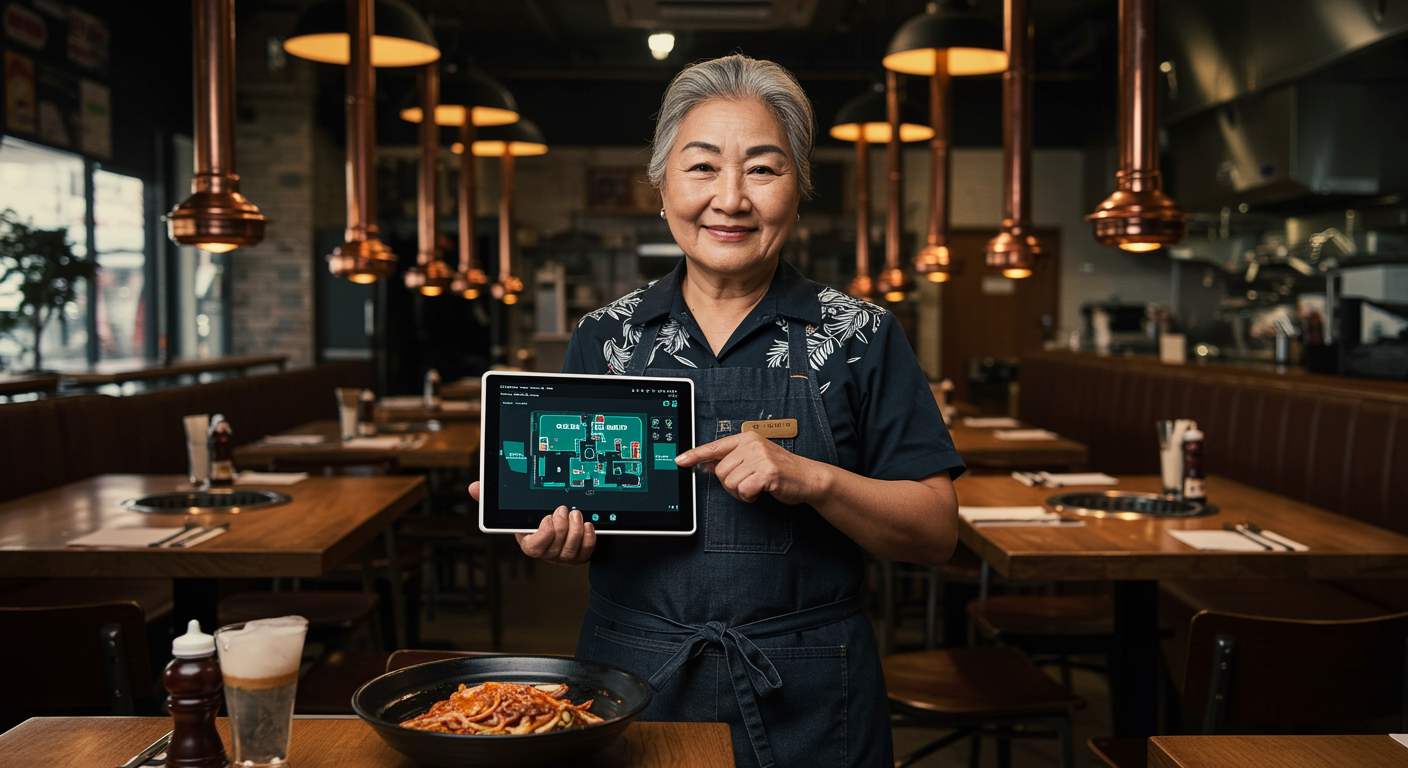
The solution often starts at the host stand. A modern POS provides a real-time, visual map of the floor, and it goes beyond a simple 'occupied' or 'vacant' flag. For a AYCE K-BBQ restaurant, you want customised table statuses that reflect the dining stages, so staff can anticipate what’s coming and speed up turnover. A clear dashboard shows which tables are near their time limit, which are waiting for a grill change, and which are ready to be cleaned.
Smart table status tracking can include visual alerts for:
-
Grill Ready: The table is set and the grill is hot for new guests.
-
Last Call: The table has entered the final 15 minutes of their dining time.
-
Bill Requested: Guests are ready to pay.
-
Cleaning Required: The table needs to be cleared and reset.
This dashboard pairs well with an integrated waitlist. Instead of guessing a 45-minute wait, the POS can use historical data for similar party sizes to predict turnover more accurately. When a table is marked 'Bill Requested', the system can automatically notify the next group on the waitlist that their table will be ready in 10 minutes. That sort of automation cuts entrance crowding, reduces perceived wait times, and seats the next party faster.
The kitchen has its own pressure: constant reorders for thinly sliced brisket, pork belly, and endless banchan. Paper tickets can be overwhelmed and small reorders get buried. A robust Kitchen Display System (KDS) helps by prioritising AYCE reorders, flagging them with colours or bumping them up the queue. That way a table’s request for more kimchi or lettuce wraps is fulfilled in minutes, not ten, keeping dining momentum and guest satisfaction high. When front- and back-of-house systems are unified, operations flow, tables turn efficiently, and staff avoid burnout.
Track, Limit, Profit: The 3-Step AYCE Ingredient Solution
Specialised POS technology is changing how profitable AYCE Korean BBQ restaurants in New Zealand can be, by tackling the stubborn problems of ingredient tracking and waste control. Tailored POS solutions provide real-time monitoring, customizable consumption limits, and automated reporting—features that match the demands of unlimited dining concepts.
Solution 1. Tiered Menu with Customisable Consumption Controls
Implement tiered menu structures (e.g., Standard vs Premium) with customisable consumption limits to protect margins. Set per-table caps for high-cost items (e.g., 2 orders of wagyu for Premium tier) and dynamic per-order limits (e.g., max 3 meat plates per round for Standard tier). The system triggers staff alerts when thresholds are nearing, enabling proactive guest guidance. This dual-layer control prevents waste while preserving the authentic AYCE experience.
Solution 2. Real-time Stock Tracking
Gain immediate visibility into ingredient usage with a cloud-based pos software that tracks consumption in real time across all your locations. A centralized dashboard provides a unified view of stock levels, while automatic low-stock alerts for critical BBQ items—like marinated beef, pork belly, and banchan—prevent kitchen shortages during peak service. This precision minimises costly over-ordering and ensures your grill stations never run dry, maintaining seamless service for every guest.
Solution 3. Upselling for Tiered Profitability
Boost profitability by enabling seamless à la carte upgrades for standard-tier customers. The POS system automatically applies itemised billing for premium add-ons like A5 wagyu or wine, eliminating manual errors and turning incremental orders into reliable profit streams.
Revolutionize Your Restaurant's Efficiency
For New Zealand's busy Korean BBQ scene, handling AYCE service well requires more than a standard POS. Eats365 offers specialised solutions, from our robust restaurant POS to kitchen display systems, built to streamline operations, cut waste, and lift customer satisfaction. Take control of inventory, improve table turnover, and unlock better profitability. Enquire with Eats365 today to find out how our tailored technology can help your restaurant succeed.
FAQs on POS Systems for All-You-Can-Eat Korean BBQ Restaurants in New Zealand
Q: What are the best POS systems for managing all-you-can-eat Korean BBQ restaurants in New Zealand?
Specialised POS systems like Eats365, designed for AYCE dining, provide real-time ingredient tracking, tiered menu management with custom consumption limits, and integrated kitchen displays to handle high-volume reorders and improve table turnover.
Q: How can New Zealand restaurants optimize order management in AYCE dining?
Optimise order management by implementing a POS with a Kitchen Display System (KDS) that prioritises AYCE reorders and unifies front- and back-of-house workflows, reducing errors and maintaining service speed during rushes.
Q: What makes a POS system ideal for Korean BBQ restaurants with unlimited dining?
An ideal POS features real-time stock monitoring with cloud-based dashboards, tiered menu structures with custom consumption limits, specialised table status tracking (e.g., 'Grill Ready'), and integrated waitlist management to control costs, reduce waste, and enhance guest flow.
Q: What technology helps reduce seating bottlenecks in all-you-can-eat restaurant concepts?
POS systems with real-time visual floor maps, custom table statuses (like 'Last Call'), and predictive waitlist notifications reduce bottlenecks by enabling efficient table turnover management.
Q: Can Eats365 solve ingredient tracking challenges for all-you-can-eat restaurants?
Yes. Eats365 provides cloud-based real-time stock monitoring with centralized dashboards, automatic low-inventory alerts, and custom consumption limits per table to control waste. GST-compliant reporting and automated supplier ordering based on consumption patterns streamline purchasing and reduce costs.
Q:
Why generic POS systems fail for AYCE restaurants in New Zealand?
A: Generic POS systems, designed for à la carte dining, lack real-time ingredient tracking, customizable consumption limits, and tiered menu support for AYCE concepts, leading to waste, stockouts, and seating delays.
Q:
How do Eats365's POS features specifically help Korean BBQ restaurants manage unlimited dining?
A: Eats365 helps by providing real-time ingredient tracking with cloud-based dashboards, tiered menu management with custom consumption limits, and advanced table status tracking (e.g., 'Grill Ready'). These features prevent shortages, control waste, and streamline seating turnover for AYCE Korean BBQ. Enquire with Eats365 today to find out how our tailored technology can help your restaurant succeed.