Explore the Top 6 Self-Ordering Systems for Small Businesses in Australia
Are you constantly grappling with increasing labor costs and lengthy queues at your cafe or restaurant in Australia? Introducing a self-ordering system into your establishment could revolutionize your operations and boost customer satisfaction!
 30 Apr 2025

 Zeyno
Zeyno
Contents
What is a Self-Ordering System?
A self-ordering system is a technology that empowers customers to place their own orders without direct interaction with service staff. This innovation allows diners to navigate menus, customize orders, and submit them electronically. The systems come in several forms, catering to various operational requirements and customer preferences within the food and beverage industry.
Common Types of Self-Ordering Systems:
-
Self-Service Kiosks: These freestanding digital terminals, often positioned near entrances or counters, enable customers to browse menus, place orders, and make payments directly on the spot. They are particularly popular in quick-service restaurants (QSRs) and casual dining environments.
-
Tabletop Tablets: These devices, placed on individual tables, allow diners to order at their leisure, request services, and sometimes pay right from their seats.
-
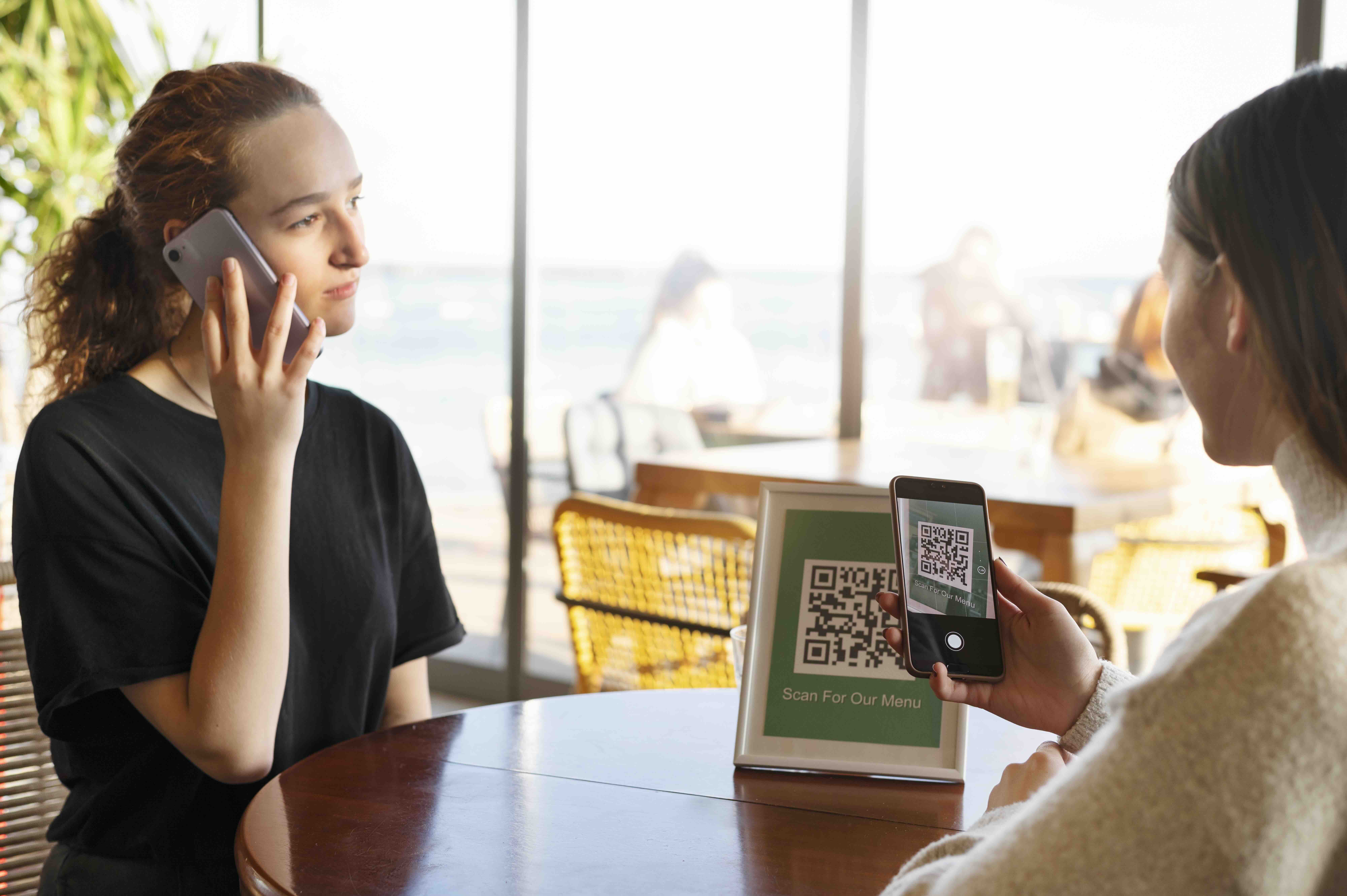
Mobile Apps: Whether branded by the restaurant or run through third-party providers, these apps are downloaded onto customers' smartphones, allowing them to browse menus, order ahead for pickup or delivery, or even place an order from their table using QR codes.
-
Online Ordering Platforms: Integrated into a restaurant's website, these web-based systems allow customers to place orders for takeaway or delivery via their computers or mobile browsers.
Core functionalities often include digital menu displays, order customization options, direct integration with kitchen display systems (KDS) or POS systems, and payment processing capabilities. Crucially, a self-ordering system should seamlessly integrate with a restaurant's existing technology to centralize order management, track inventory, report sales, and streamline kitchen operations. This holistic integration prevents data silos and operational inefficiencies, ensuring that orders placed via kiosks, apps, or online platforms are processed smoothly.
Read more: What is Self-Service Kiosk? How It Benefits Restaurants & Takeaways? (eats365pos.com)
Benefits of Self-Ordering for Australian Businesses
1. Labor Cost Optimization
The rising wage costs and labor shortages in Australia's hospitality sector make efficient staffing essential. By shifting tasks from simple order-taking to more value-added roles like customer service or managing deliveries, self-ordering systems can help manage operational expenses, particularly during peak hours. While savings vary depending on the venue and implementation, the essence of operational efficiency remains consistent.
2. Enhanced Order Accuracy
Miscommunication during manual order-taking can lead to errors, resulting in food waste and dissatisfied customers. Self-ordering systems allow customers to input their orders directly, minimizing these errors and improving operational efficiency. A 2019 report indicated an 18% reduction in order-entry mistakes in venues employing kiosks, translating into a 7% decrease in food waste and remake costs.
3. Improved Customer Experience
Modern consumers, especially those from younger demographics, value the convenience and autonomy that self-service technology provides. By reducing wait times and allowing customers to order and pay at their own pace, self-ordering systems enhance the dining experience. Features such as QR code-based ordering also reduce physical contact, a lingering concern for some patrons.
4. Upselling Opportunities and Increased Average Order Value
Digital menus are a powerful tool for upselling through visual merchandising. Eye-catching images and prompts like "Would you like to add a drink?" seamlessly encourage customers to increase their orders. Many restaurants have reported increased average order values with the use of digital kiosks, a trend also observed internationally.
Best Self-Ordering Systems for Small Businesses in Australia
Selecting the right self-ordering system depends on a business's unique needs, budget, existing technology, and service style. Below are six prominent options available in the Australian market, ideal for small businesses:
1. Eats365
-
Features: Offers restaurant POS system features, self-service kiosks, QR code table ordering, and website online ordering integration. Known for its modular approach, robust menu management, and KDS integration.
-
Pricing: Starts from AUD$ 25 per month for it's POS system with basic operational functions. Advanced features are available with the price depends on selected modules. Positioned as scalable for growing businesses. Free trial is available.
-
Integrations: Integrates with its POS ecosystem, third-party delivery platforms, and payment processors.
-
User Reviews: Commended for feature richness. Direct platform search for Australian small business reviews may be necessary.
2. Square for Restaurants
-
Features: Offers QR code ordering and compatibility with third-party kiosk apps integrated with its hospitality POS system. Excels in integrated payment processing.
-
Pricing: Offers a free basic plan with transaction fees; Square for Restaurants Plus has a monthly subscription.
-
Integrations: Connects with Square's ecosystem and accounting software like Xero.
-
User Reviews: Praised for ease of use and transparent pricing, though less complex compared to specialized systems.
3. Lightspeed Restaurant (L-Series/K-Series)
-
Features: Restaurant POS solutions with self-ordering kiosk options and integrated online/QR code ordering. Provides detailed reporting and inventory management.
-
Pricing: Tiered subscription based on features and terminals.
-
Integrations: Integrates with Australian accounting software, payment processors, and delivery services.
-
User Reviews: Highly regarded for flexibility and comprehensive features.
4. me&u
-
Features: Focuses on QR code-based table ordering and payment, enhancing the dine-in experience.
-
Pricing: Subscription and per-transaction commission. Consultation advised for exact rates.
-
Integrations: Integrated with popular Australian POS systems, ensuring smooth order flow.
-
User Reviews: Esteemed for user-friendly interfaces and data insights.
5. Oddle
-
Features: Branded storefront, QR ordering, delivery management, loyalty tools, and customer data insights.
-
Pricing: Zero start-up fees; usage-based model with optional add-ons for reservations and marketing.
-
Integrations: Supports Stripe, PayPal, Google Maps, Meta, DoorDash, and analytics platforms.
-
User Reviews: Highly rated for ease of use and QR ordering; some app issues reported.
6. OrderUp!
-
Features: Provides QR code table ordering with a focus on user ease. Includes menu management and integration options.
-
Pricing: Offers commission-free or percentage-based plans.
-
Integrations: Compatible with various Australian POS systems.
-
User Reviews: Highlighted for local support and market understanding.
Streamline Your Operations and Boost Profits
Incorporating a self-ordering system can greatly improve your restaurant's operational efficiency and customer experience. Whether your establishment is a quick-service restaurant, cafe, or casual dining venue, a comprehensive solution like Eats365 could be your pathway to growth and increased profitability. Interested in finding out how Eats365 can elevate your business? Contact us today for a personalized consultation.